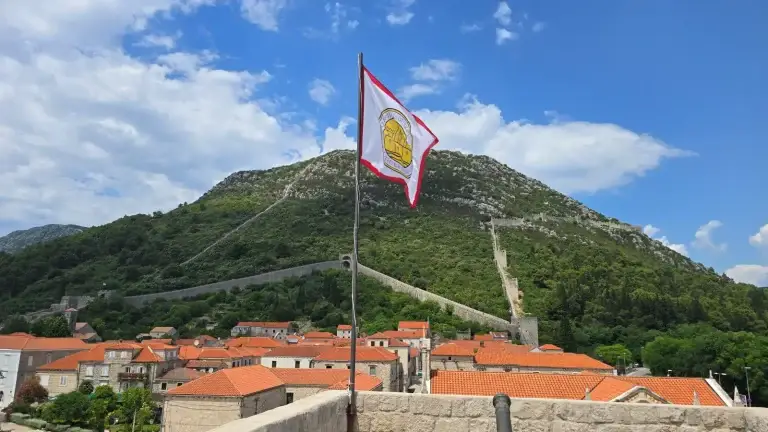
My first family visit to Dubrovnik was in October 2006. Like most visitors, we walked along Stradun in the old town and walked the wall. Everybody in the family really loved the place, so we’ve returned many times since, with friends and family.
I have also visited and stayed in Dubrovnik countless times over the years on business trips, so I’m quite familiar with the city.
On my last visit, we did it differently. We walked the old town from end to end, went up Mount Srđ, and explored Lapad, Babin Kuk and Gruž, the parts of Dubrovnik where people actually live. Below, you will find a short and a long walking route through the old town, practical tips on crowds, transport and prices, and my honest opinion on where to stay.
My video from Dubrovnik
If you want to see all of it before you read, here is my video. It is a long one, but so is the walk 😉
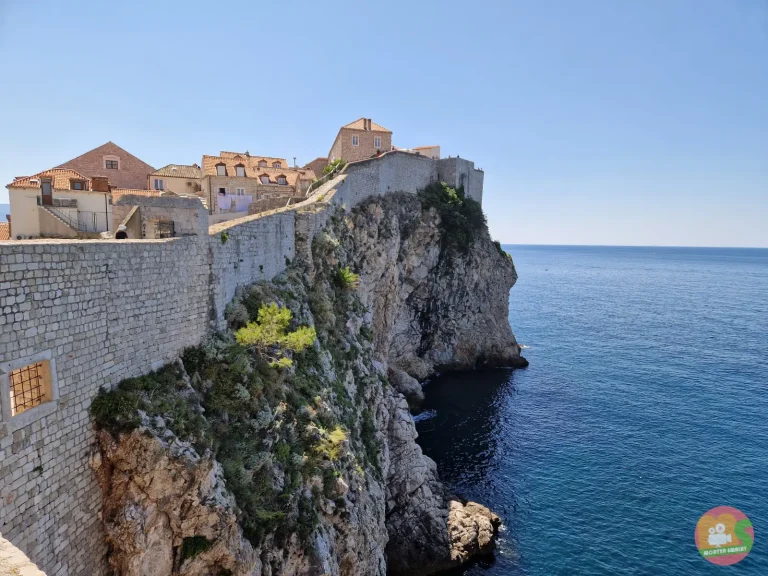
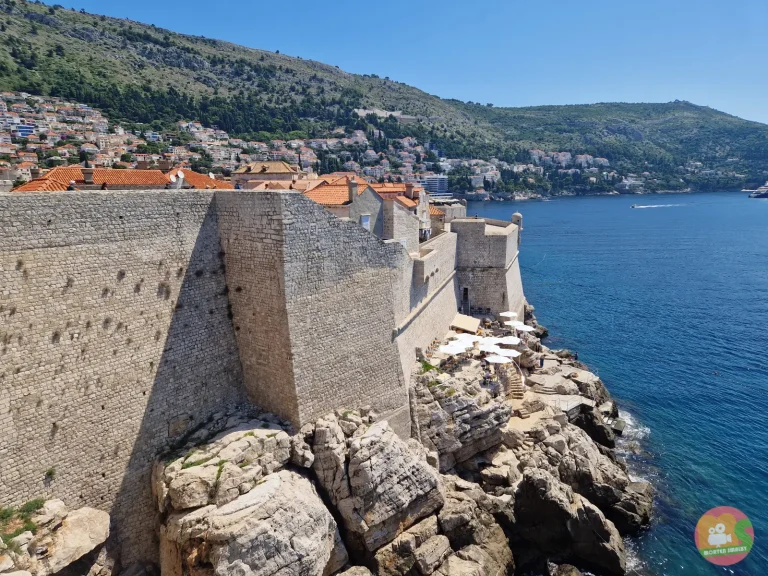
If you are planning to walk the wall, I have a separate article about the Dubrovnik wall, so in this article I stay on the ground.
Dubrovnik in short
- Dubrovnik was an independent republic (Ragusa) for centuries, until Napoleon ended it in 1808.
- The old town has been on the UNESCO World Heritage list since 1979.
- Around 1,500 people still live inside the wall.
- Prices per square metre in the old town are among the highest in Croatia (if not the highest).
- The old town has an estimated 4,300 stairs, not counting the 1,080 on the wall.
- Dubrovnik gets between 500 and 600 cruise ship visits a year.
- The old town is free to enter. You only pay for the wall, museums, and the things inside.
- More than 1.1 million international tourists visit Dubrovnik every year.
Good to know before you visit
Crowds in Dubrovnik
Dubrovnik is mega popular, and you will feel it. Between 500 and 600 cruise ships arrive every year, which on many days means 4,000 to 5,000 extra people walking the same streets as you. The ships either anchor in front of the old port and bring people in by small boats, or dock in the large port in Gruž and send everyone to Pile Gate by bus.
You will easily recognise the cruise groups. One person in front with a paddle or umbrella in the air, and 40 or more people following like ducklings. Most of them only stay a few hours, so if you can, explore early in the morning or late in the afternoon.
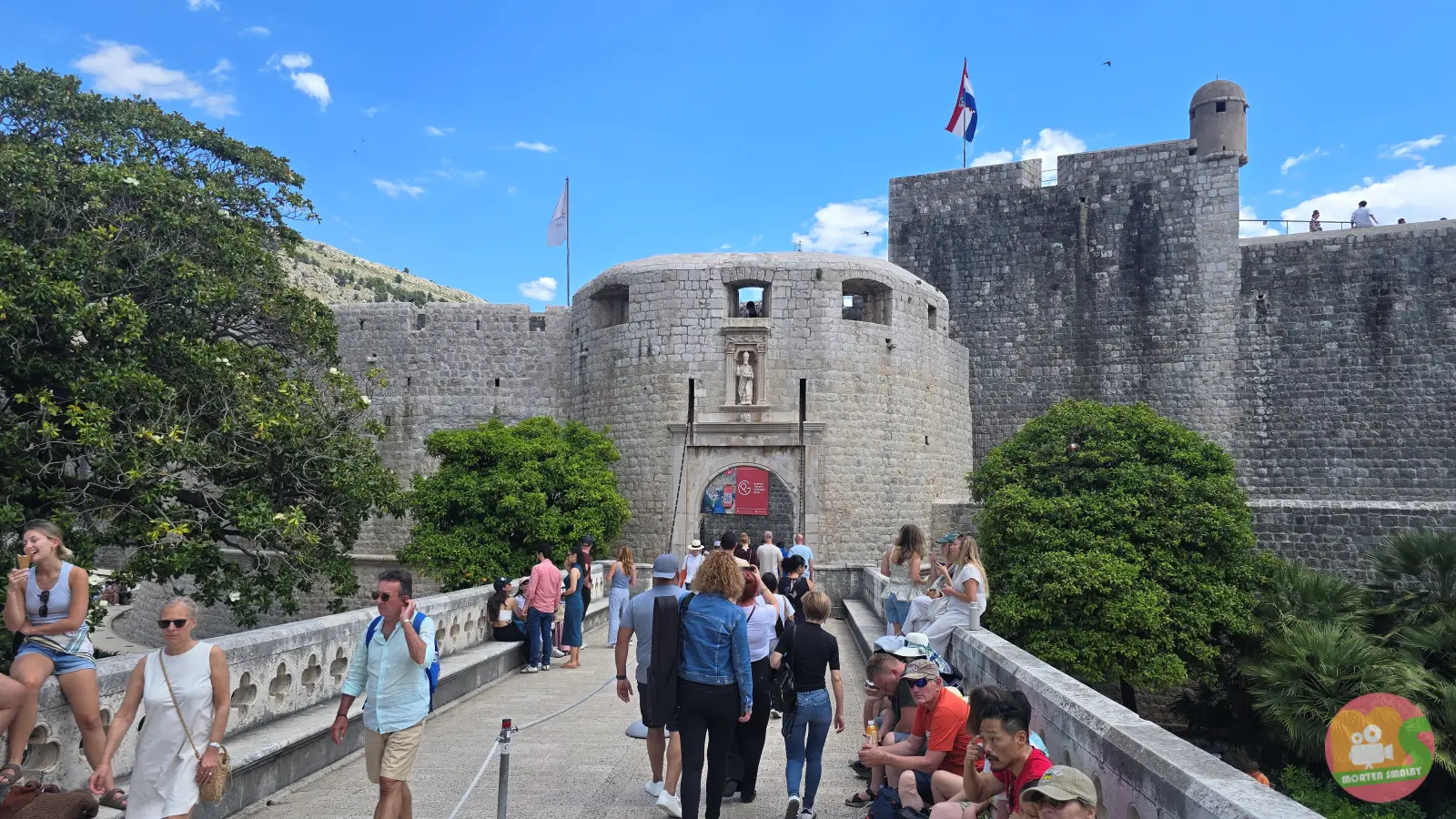
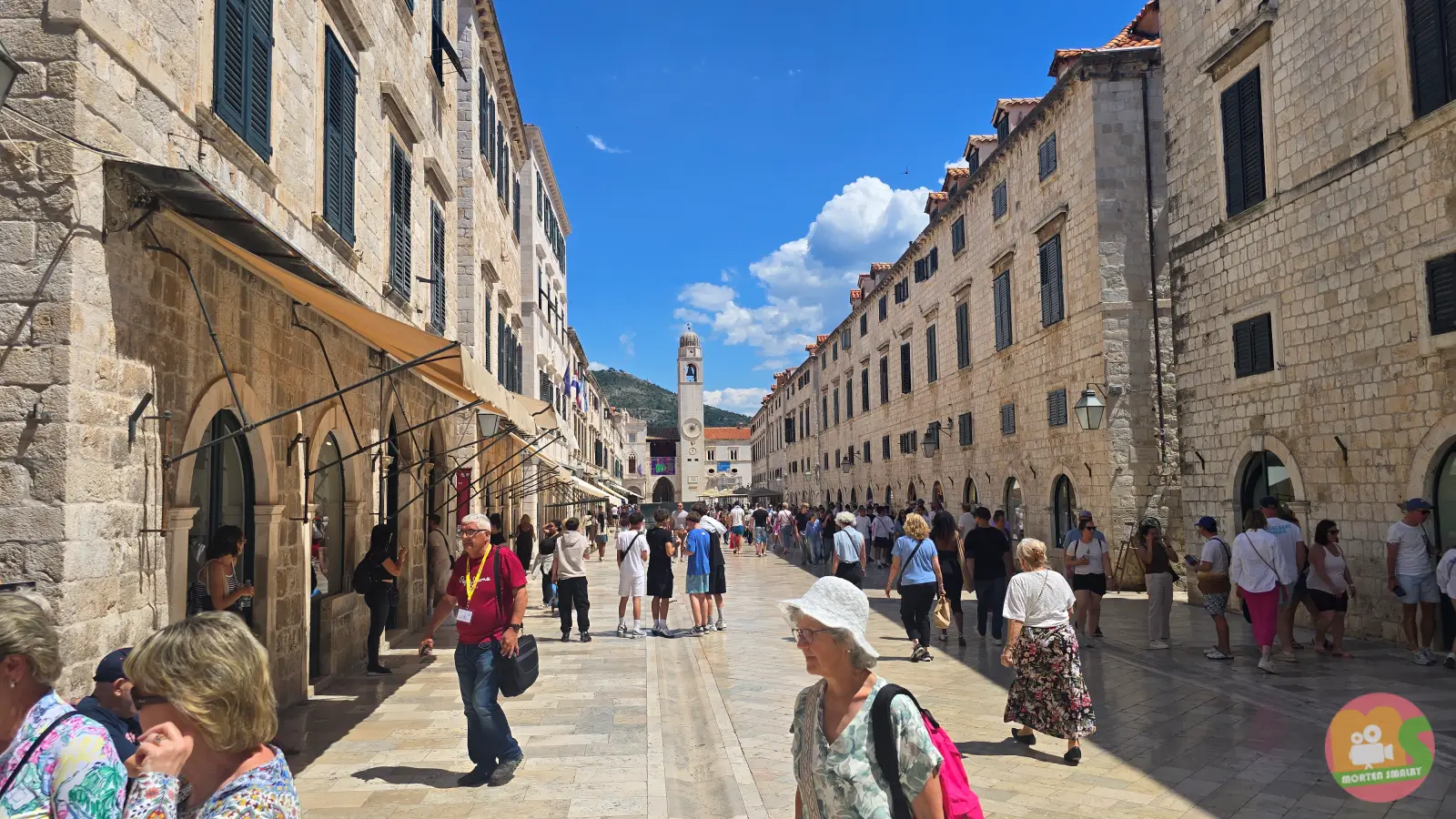
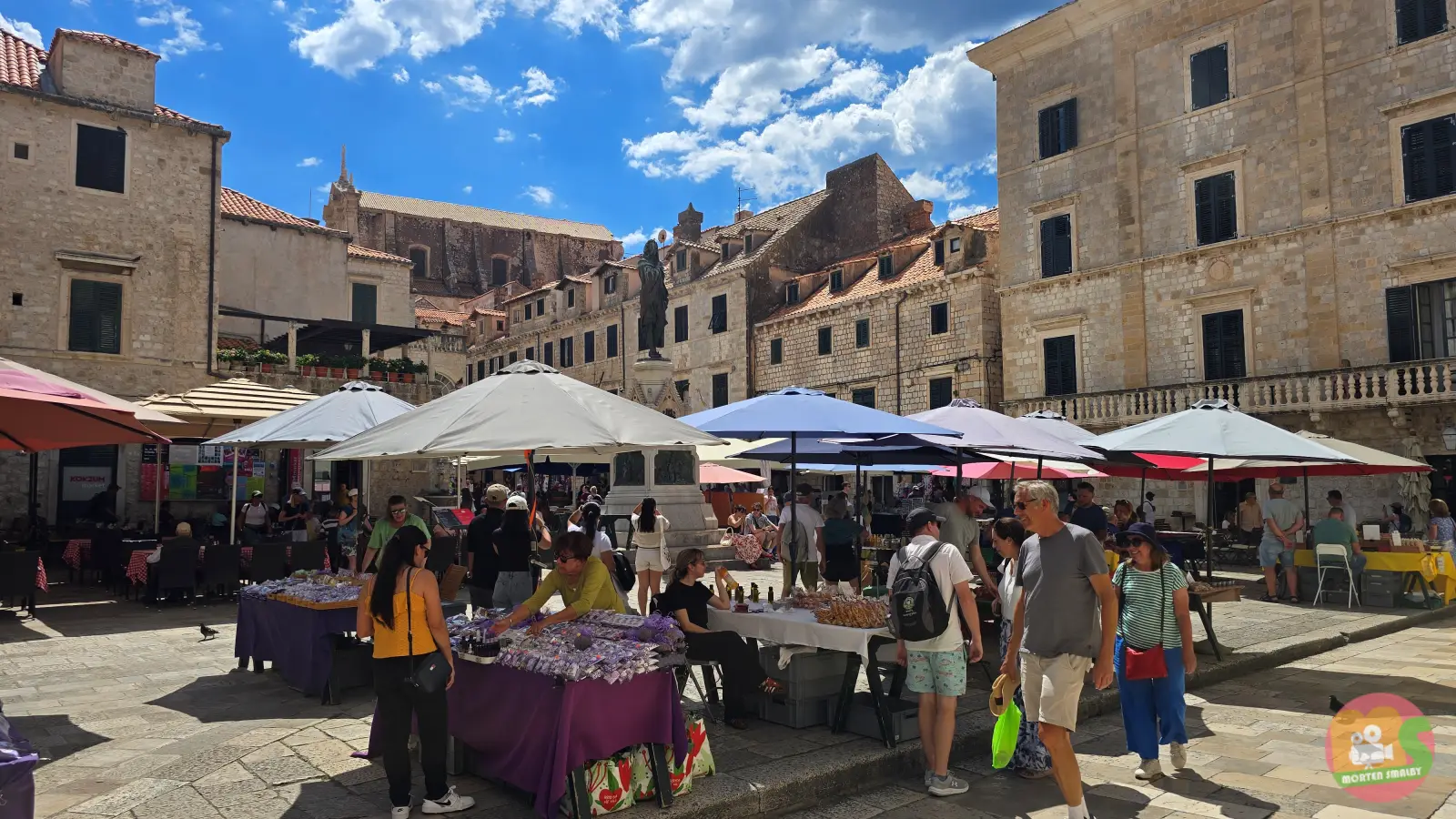
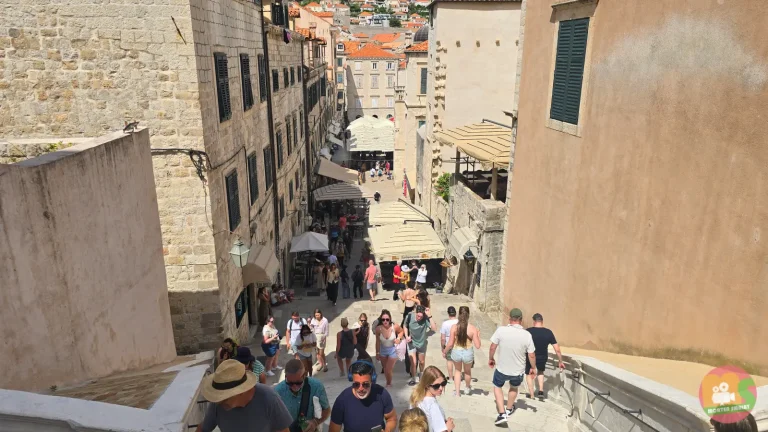
My last long visit was at the end of May, and I actually thought the crowds would be moderate. Boy, was I wrong. As you can see in the photos in this post, there were plenty of people in the old town.
So if you want to visit when it is less crowded, you probably have to come earlier in the year or after September.
Dubrovnik Pass
When visiting the old town and the wall in Dubrovnik, I recommend you buy the Dubrovnik Pass, which costs the same as a ticket for the wall itself. The Pass includes entrance to a number of museums in the old town as well as free public transport, so if you plan to pay the €40 to climb the wall anyway, you might as well buy the Pass.
Note: For the sights I mention below as included in the Dubrovnik Pass, you can of course also buy an individual ticket.
Transportation and Parking
Public Buses
If you are staying in Dubrovnik, the cheapest way to get around on your own is the public bus. A single ticket, valid for one hour, costs €2.50 if you buy it from the driver, or €1.73 if you buy it at a Libertas kiosk. Note: Libertas also has an app (Android and iOS). I did not find it very useful, and judging by its App Store rating, I am not the only one!
Taxi Apps
If you are travelling as a group, you can use Bolt, Uber, or a taxi to get around in town. On our last visit, we stayed in Mlini (12 km south of Dubrovnik). Most of the time, we took an Uber/Bolt to Dubrovnik, and that worked well, but we had several issues: when we wanted to go back or get around inside Dubrovnik, rides kept getting cancelled, or it took forever to find a driver. I’m not sure if this is common in Dubrovnik, but it happened to us several times on different days. Please let me know in the comments if you have had a similar experience!
Dubrovnik by Car
If you’re staying overnight in Dubrovnik and arrive by car, I highly recommend you find accommodation with parking.
If you visit Dubrovnik on a day trip and need to leave your car, the simple rule is: the closer to the old town, the more expensive it gets. Next to the wall, the price this year was €20/hour. We parked in Gruž for €3/hour and took the bus to Pile Gate.
Safety in Dubrovnik
Like the rest of Croatia, Dubrovnik is a very safe city to visit, day and night. Personally, I have never experienced any issues in Dubrovnik. The main risk is slipping on the pavement in the old town. Besides that, there might be some pickpocketing and overcharging at certain places in the evening, but if you use common sense, you should be fine.
The old town of Dubrovnik
In the video above, I walked a large part of the old town. Of course, not everybody has the time and stamina to do so, so below I explain a shorter version as well as a full old town tour.
The shorter version is 1.5 km and, apart from the first few metres after Pile Gate, is completely flat, whereas the full tour is 3.5 to 4 km and has quite a few stairs.
Pile Gate
When I bring family and friends to Dubrovnik, we start our tour around the old town at Pile Gate, which is the main entrance to the old town and probably the most photographed gate in Croatia. It is also the central hub for the city buses.
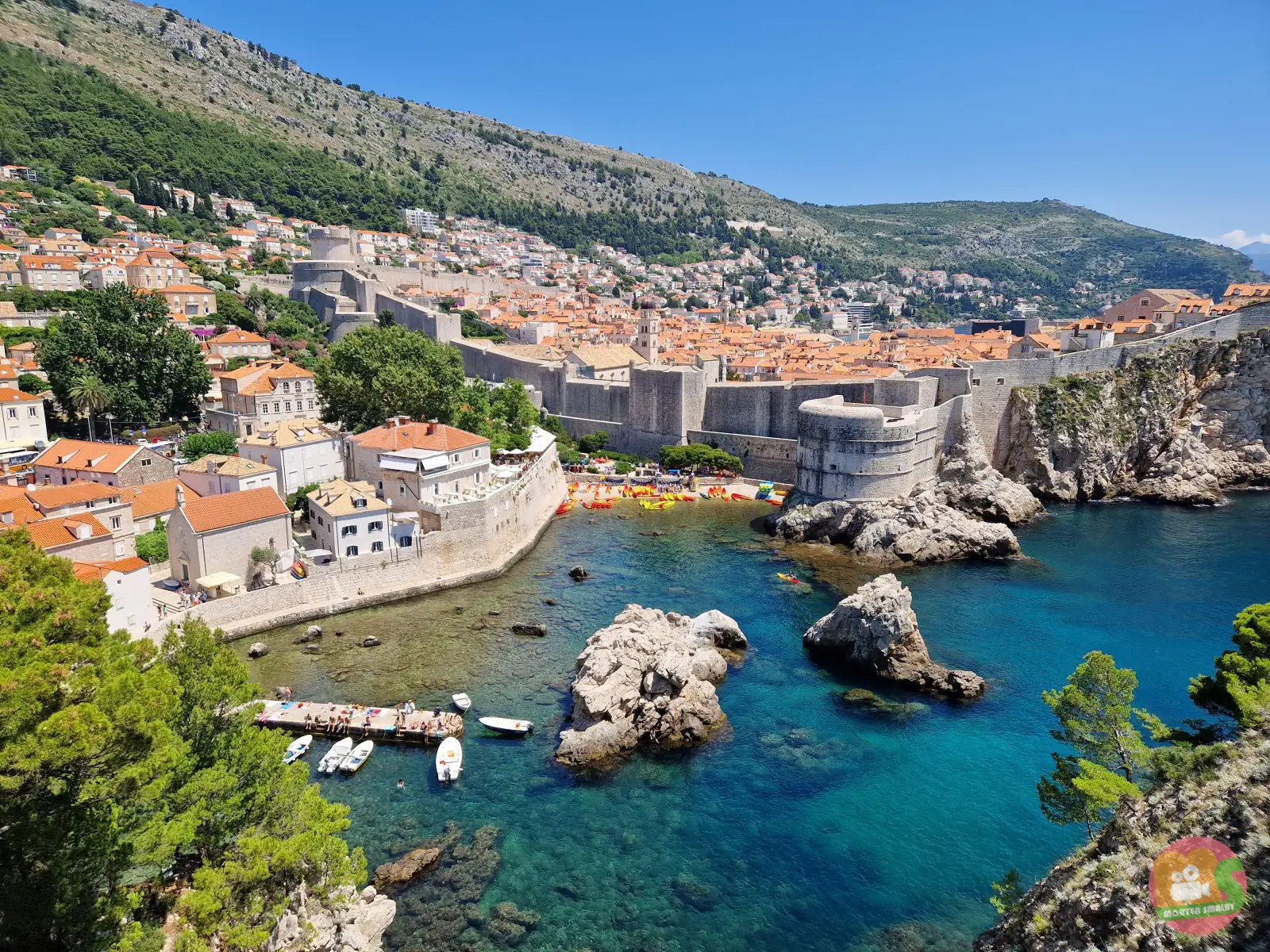
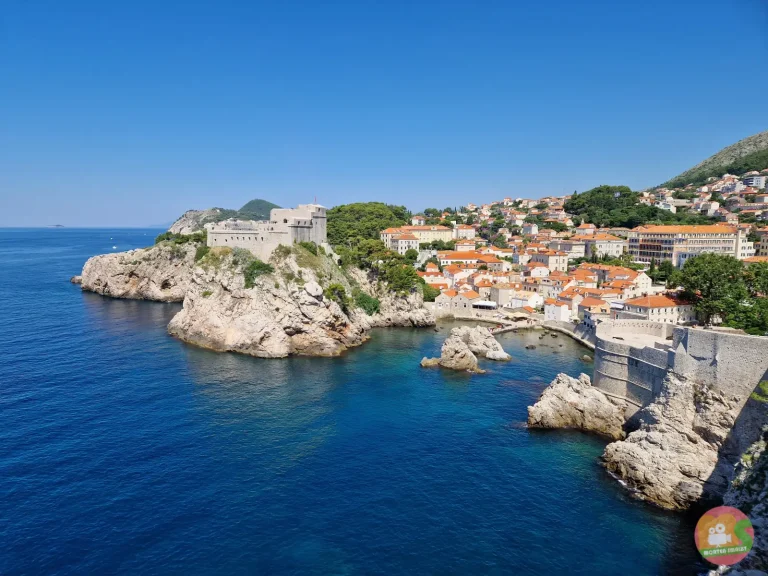
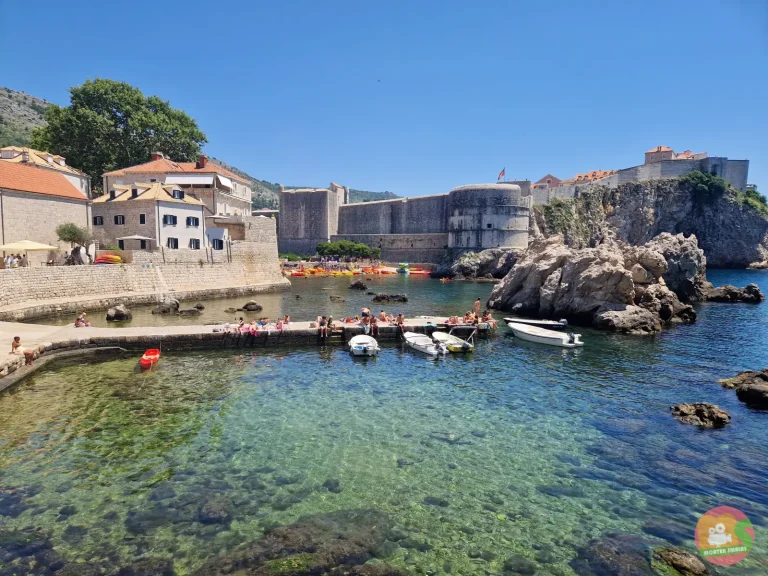
Before you enter, visit the square next to Restaurant Nautika, where there is a viewpoint. From here you can see Lovrijenac Fortress, which was the Red Keep in King’s Landing in Game of Thrones.
Stradun
Head back to Pile Gate and enter the old town. Just inside the gate are the big Onofrio fountain and the main entrance to the wall.
From the fountain, Stradun runs straight through the old town from west to east. It is probably the most famous street in all of Croatia, and everyone who visits Dubrovnik walks it. Usually at the same time as you. 😁
Stradun is mainly shops, not restaurants. Souvenirs, jewellery, clothes, and a few places selling food on the go. But there are a few coffee bars, and these are among the most expensive you will find in Croatia.
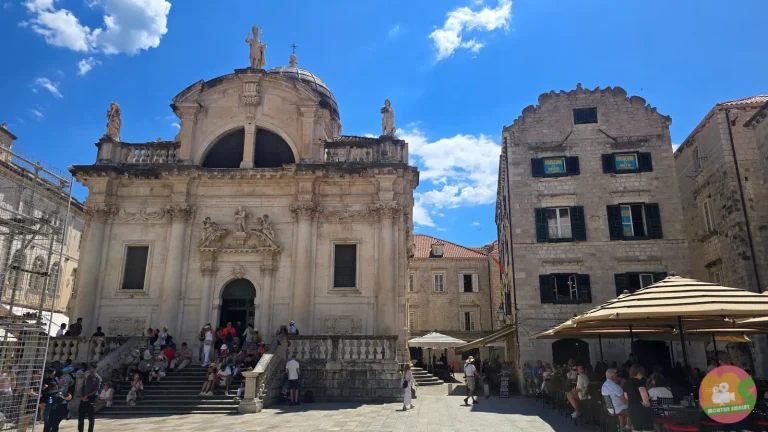
At the end of Stradun, you have the beautiful St. Blaise’s Church on your right and Sponza Palace on your left. If you are lucky, you might see a newlywed couple here. It has happened to me several times.
Ploče Gate and Fort Revelin
From the end of Stradun, follow the street as it turns left after the gate. After 100 metres, you have the second entrance to the wall on your right and the Dominican Monastery on your left. There is a museum inside the monastery (included in the Dubrovnik Pass).
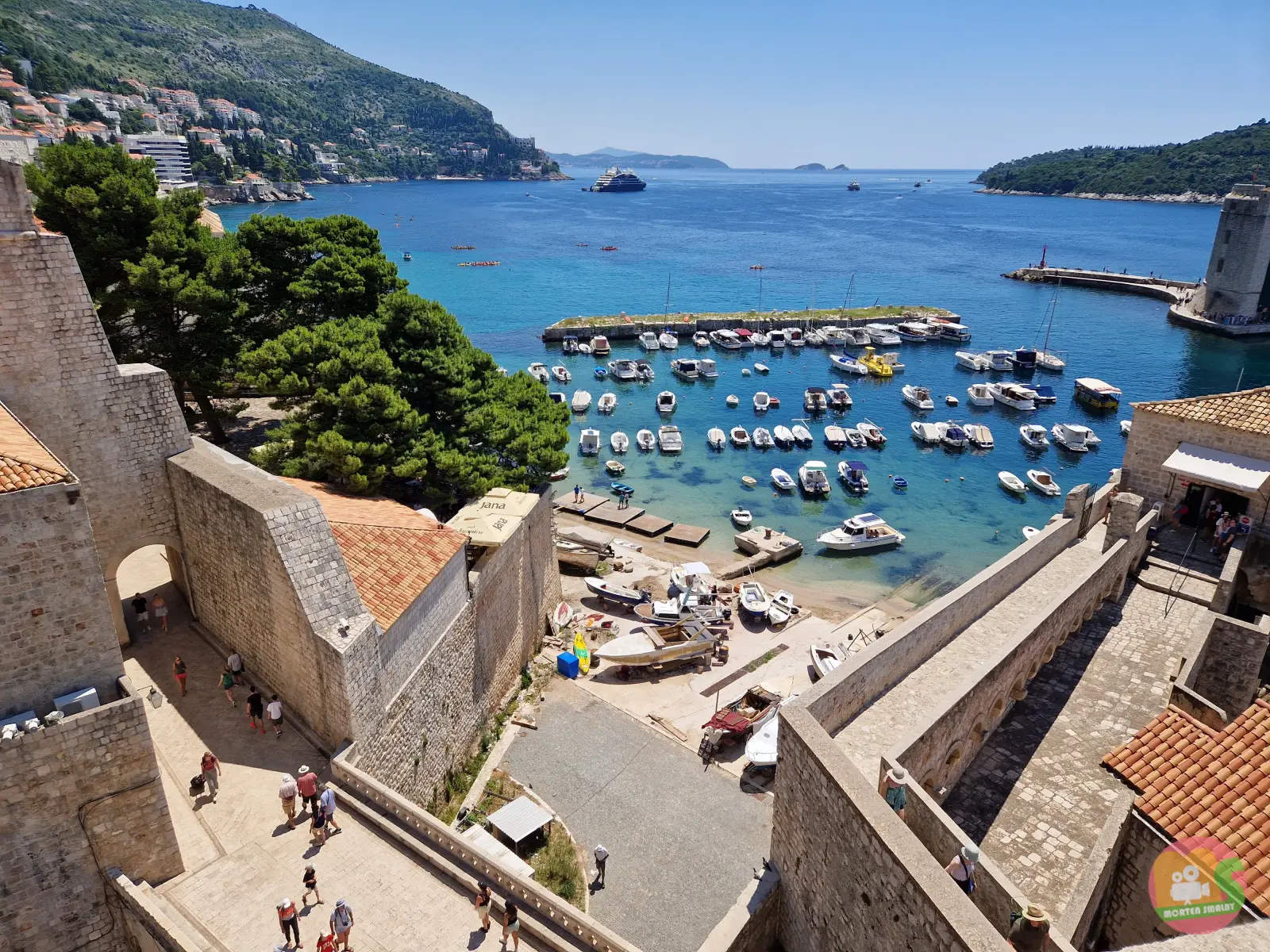
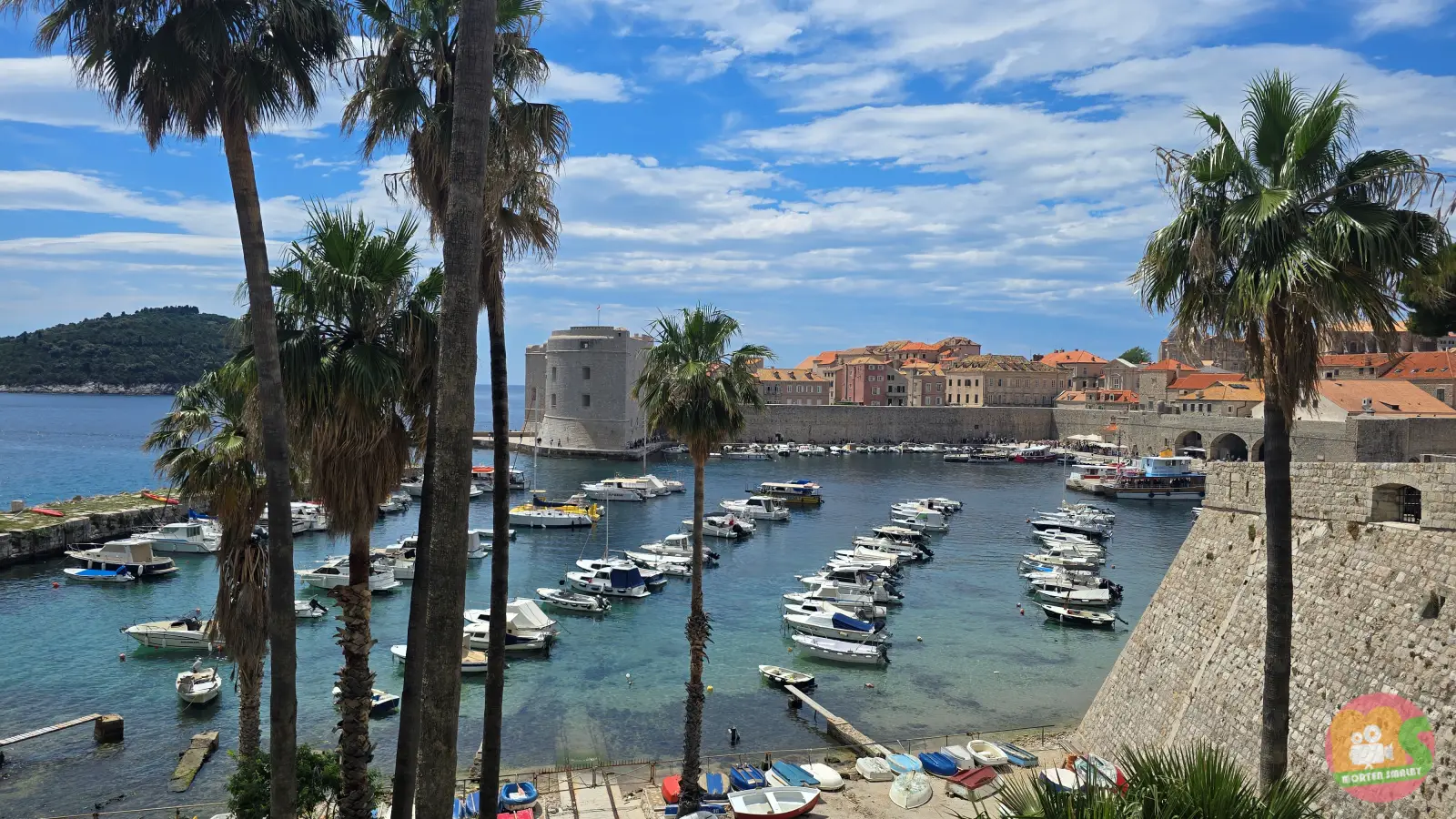
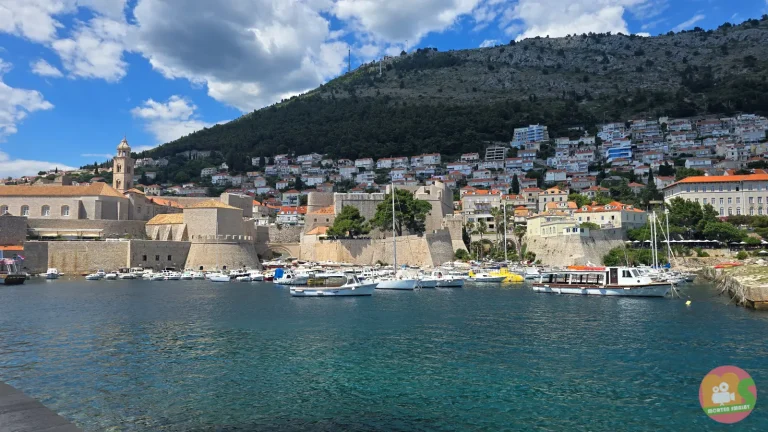
After another 100 metres, you reach the detached Revelin Fortress on your left. Inside the fortress, there is an archaeological exhibition (included in the Dubrovnik Pass), and on your right you have a great view of the old port (photo below). Ploče Gate is a few metres further on. Note: Ploče Gate is where the airport shuttle drops you off.
From Ploče Gate, the tour goes back towards the old port, but if you feel like walking a bit more, you can continue straight ahead. After 100 metres, you reach the beautifully renovated Lazareti of Dubrovnik, and a bit further on, Banje Beach, one of the most popular beaches in Dubrovnik.
The old port
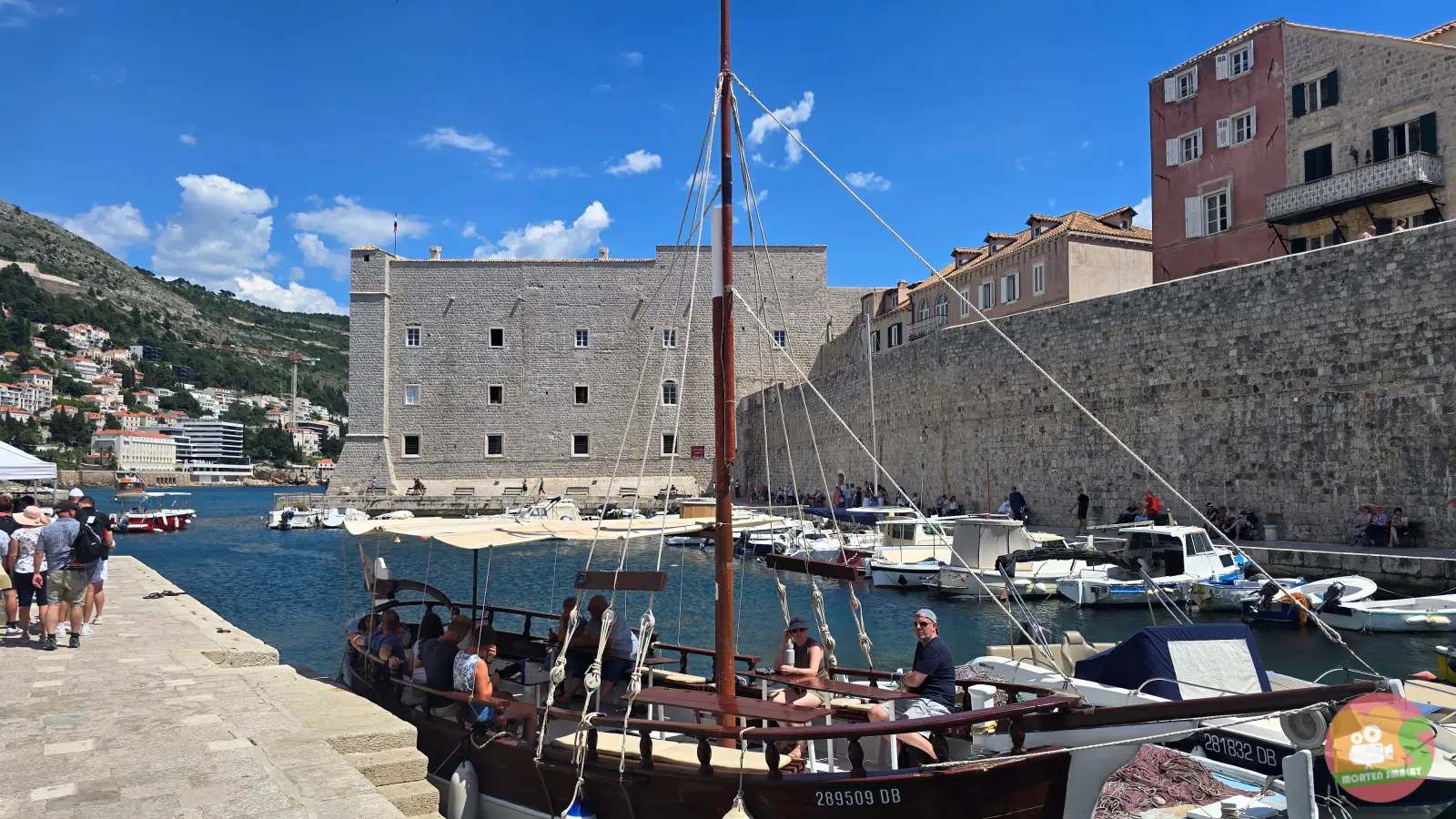
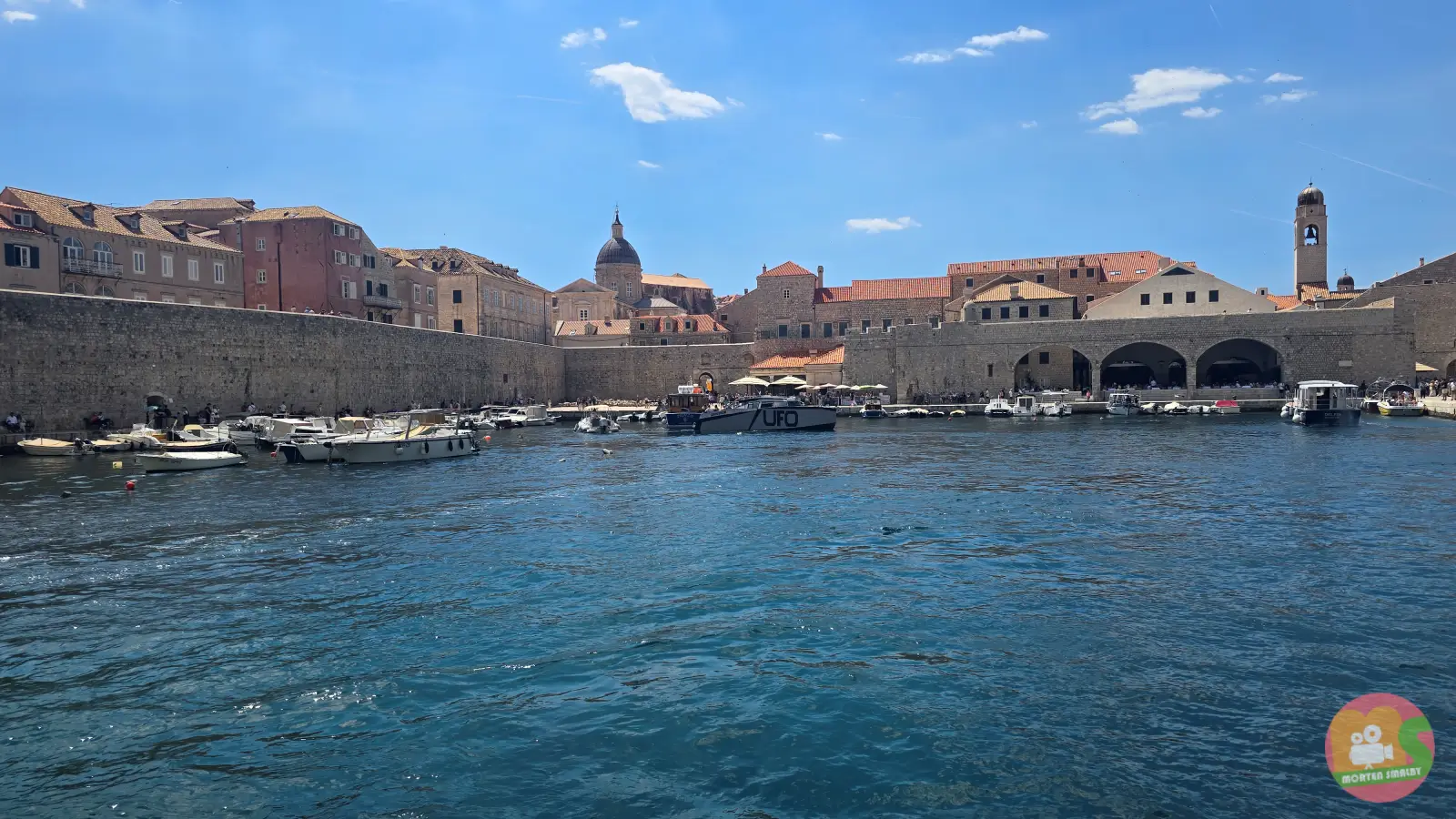
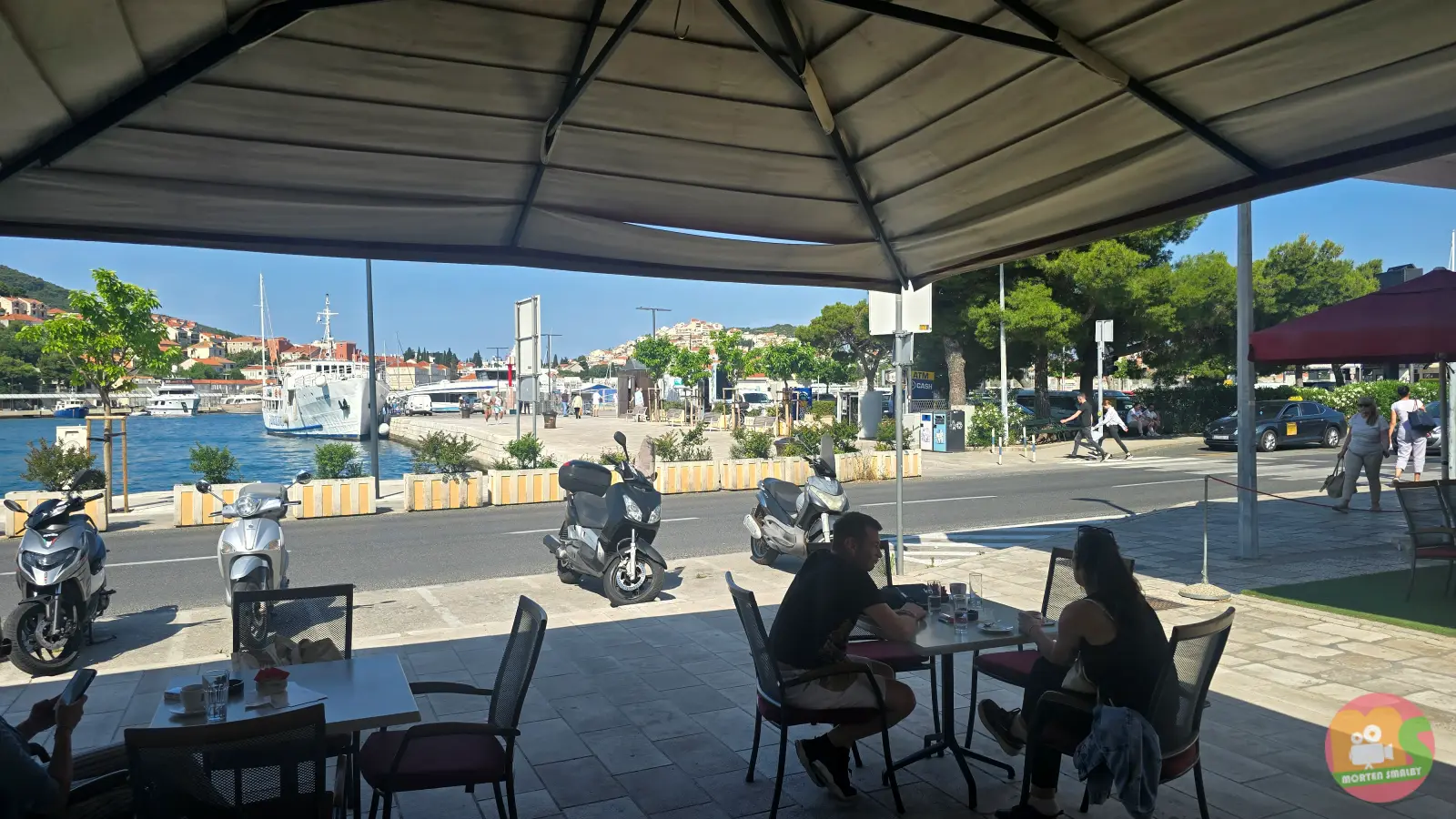
On your way back from Ploče, just before you reach Stradun, walk out through the small gate on your left, and you are at the old port. This is where the small boat traffic happens. Boats to Lokrum Island leave from here, and so do boats along the coast to Mlini and Cavtat. We stayed in Mlini on this trip, and I highly recommend taking the boat into town. If you are staying in Dubrovnik, you can take the same boats to visit Mlini or Cavtat.
You can also find tour boats, glass bottom boats, speedboat tours, and boats to the Elafiti Islands and a “blue cave”. Just so you know, this is not the famous Blue Cave on Biševo near Vis. It is a different, smaller cave south of Dubrovnik. If you are not on a budget, you can also rent a private boat here.
At the port, walk to the right past Restaurant Arsenal and leave the old port through the gate after Bastion palača.
The Rector’s Palace
The first thing you see when you are back inside the walls is the beautiful Cathedral of the Assumption of the Virgin Mary, straight ahead.
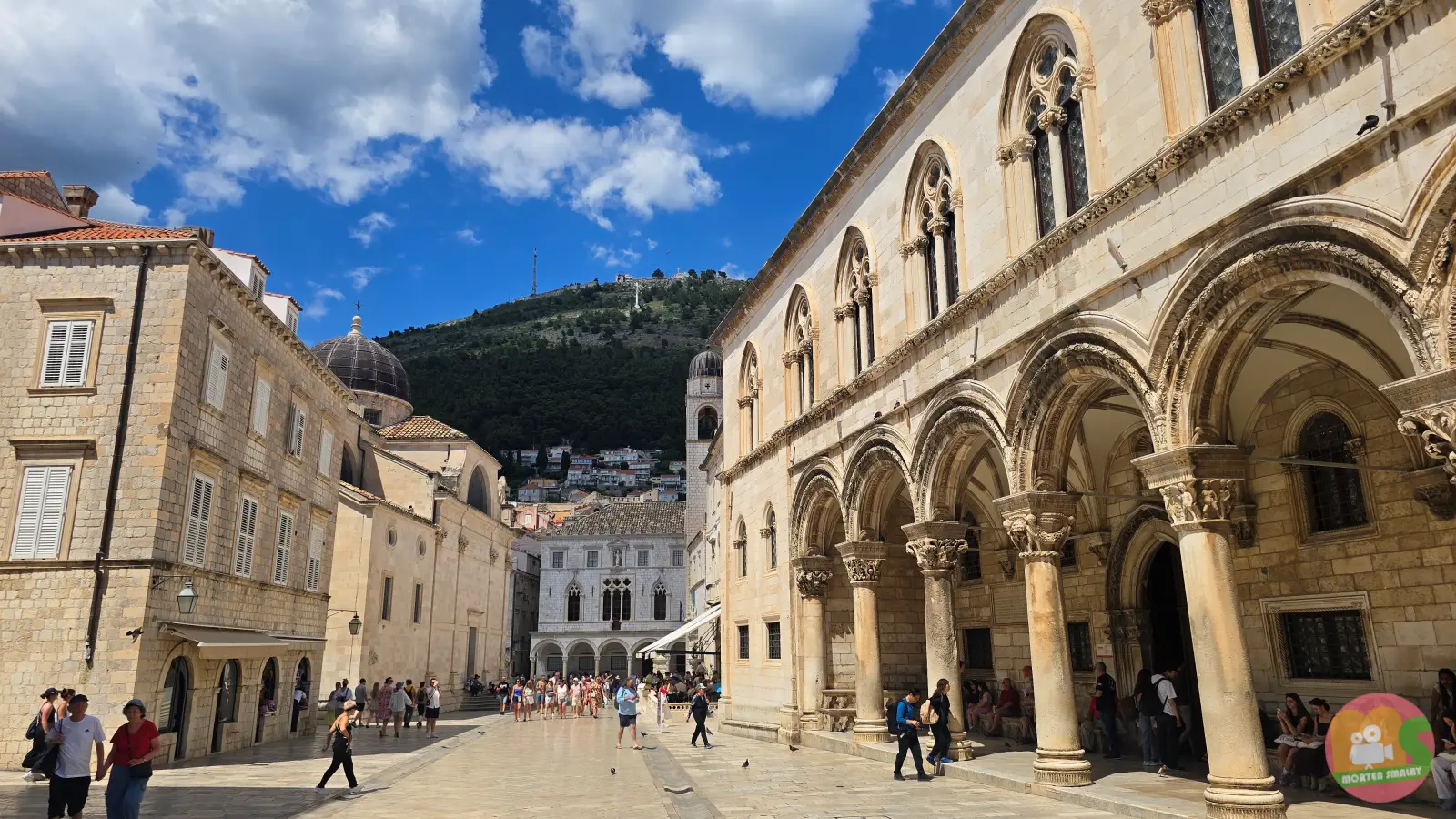
On your right, you have the Rector’s Palace, where you can find the Cultural History Museum, which is also included in the Dubrovnik Pass.
The rector was the head of the Republic of Dubrovnik, and here comes my favourite fact about the city: a rector was only elected for one month at a time. Then a new one took over. That way, nobody had time to get too comfortable with their fingers in the cookie jar. A pretty good system, if you ask me, and I can think of a few places where it might still work today.
Freedom was always very important to Dubrovnik. The republic survived for centuries by being very good at diplomacy, dealing with both the Venetians and the Ottomans. Even today, the local bus company is called Libertas, and you will see the word on flags around town.
The green market
From the Rector’s Palace, walk to the green market on Gundulić Square, right next to the cathedral. It opens early in the morning, and besides fruit and vegetables, you will find local products like dried figs, salted and sweet almonds, lavender and other homemade products. If you actually plan to buy fruit and vegetables, come early, preferably before 10 am.
If you are on the shorter route, walk west along Od Puča (see more below). When you get to the end of the street (by the Hard Rock Cafe) and look right, you will see Onofrio’s Large Fountain, which means you are back at Pile Gate.
If you are on the longer tour, continue reading. 😉
The Jesuit stairs (Game of Thrones)
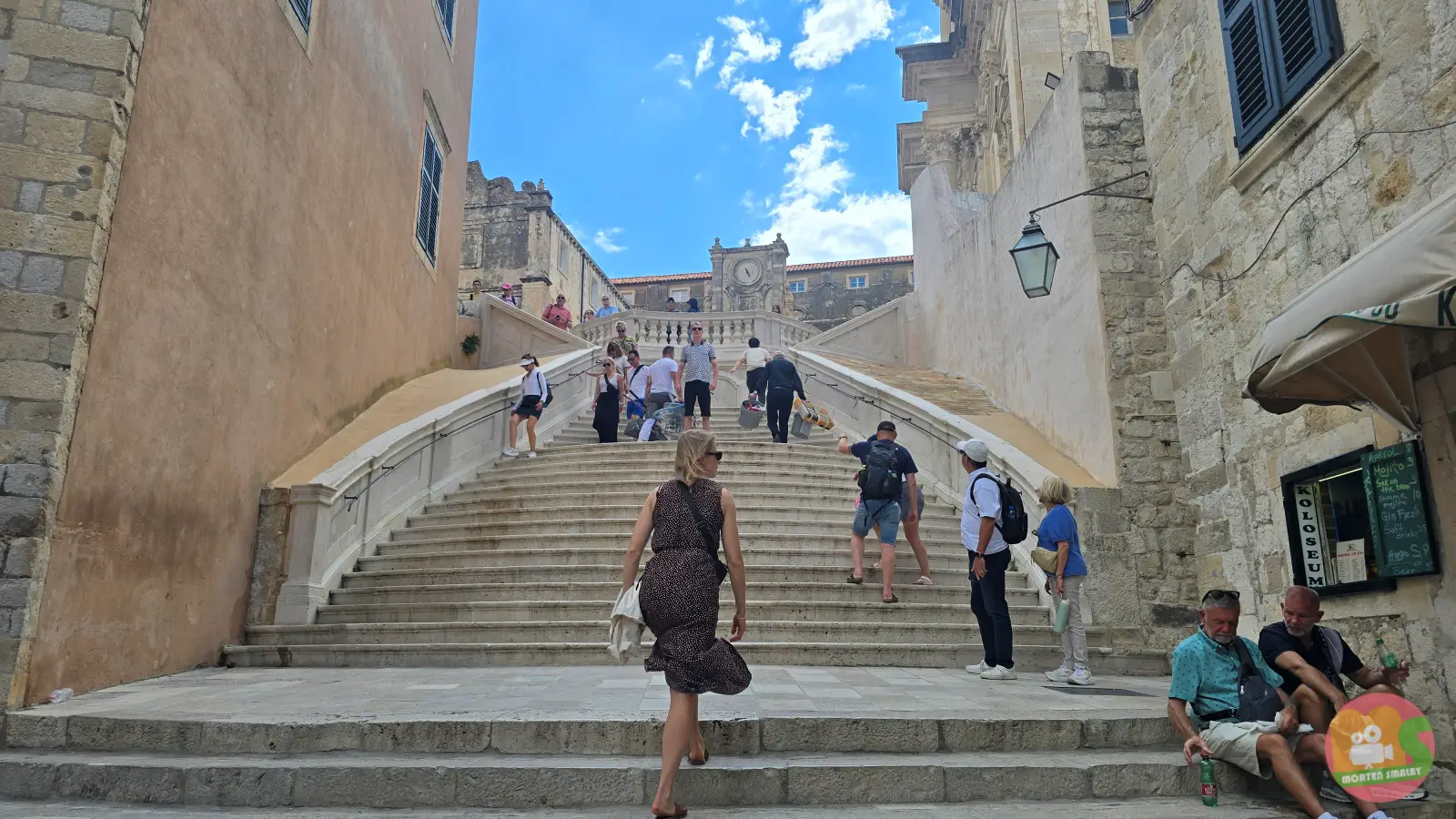
From the market, the Jesuit stairs lead up to the Jesuit church. If you watched Game of Thrones, you know them from Cersei’s walk of shame. The last time I visited, the stairs were closed for renovation, so this time I finally got to walk up them. Of course, you will find crowds there trying to get the right photo.
At the top of the stairs is a square with the Church of St. Ignatius, built in 1725.
The southern streets and Buža bar
From the top of the stairs, walk south towards the wall. After 50 metres, you reach a small street, Ul. od Margarite. Follow it, and soon you will be walking along the wall.
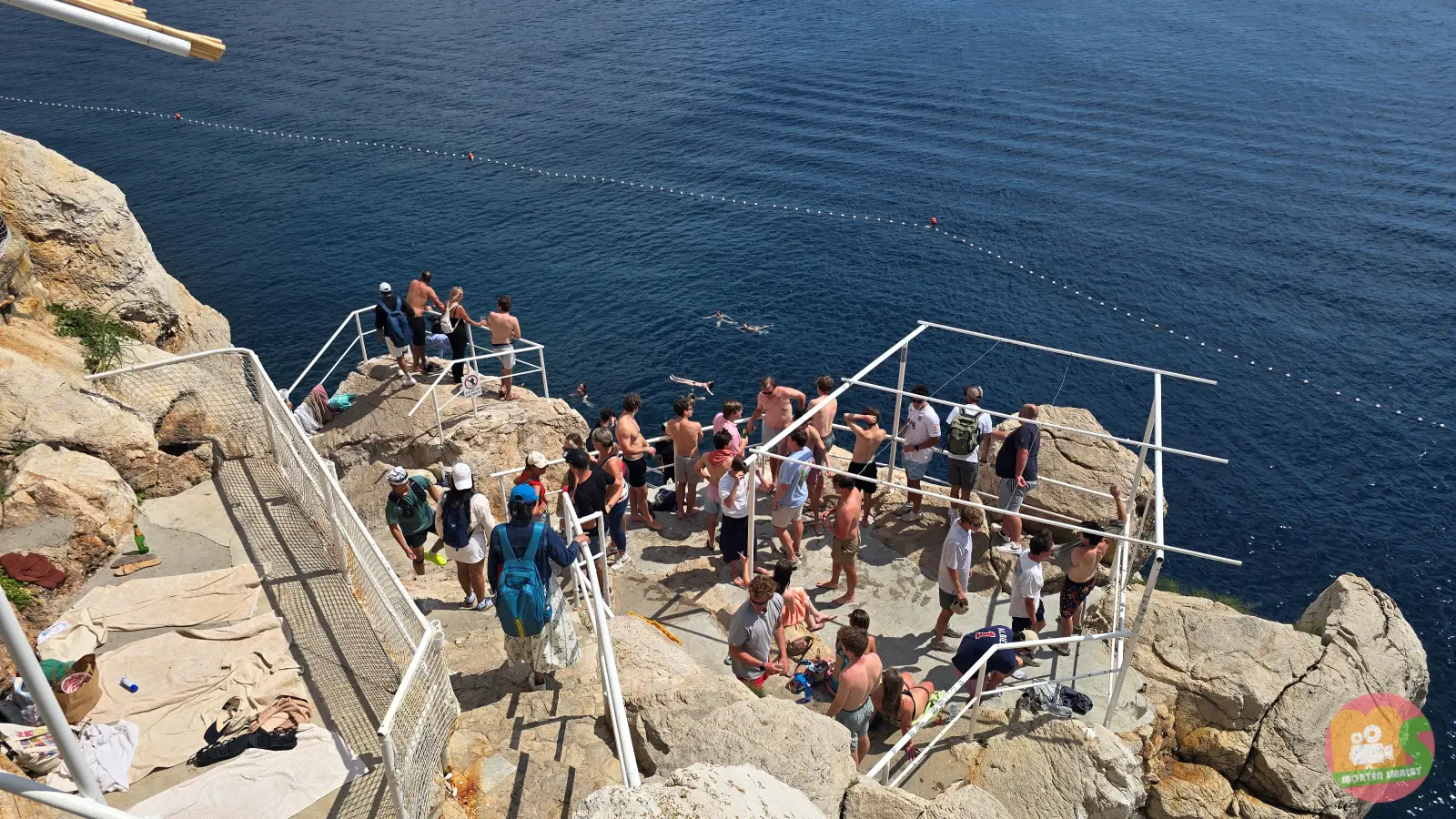
After 100 metres, there is a hole in the wall. This is the entrance to Buža bar. If you have walked the wall, this is the bar you saw on the outside of the wall, and an absolute must visit for the younger generation.
Years ago, when I brought family here, there were tables and chairs on the rocks, and we sat with a coffee looking at the sea. The tables are gone now, but you can still get a drink, and you can still jump from the rocks into the sea and climb back up the ladder.
Ragusinum, my hidden find
After your drink at Buža bar, continue west along the wall on Ul. od Kaštela. On this part of the walk, you can really see that people live in the old town: laundry hanging from the windows, small gardens, a playground and benches where you can rest after all the stairs up from Stradun.
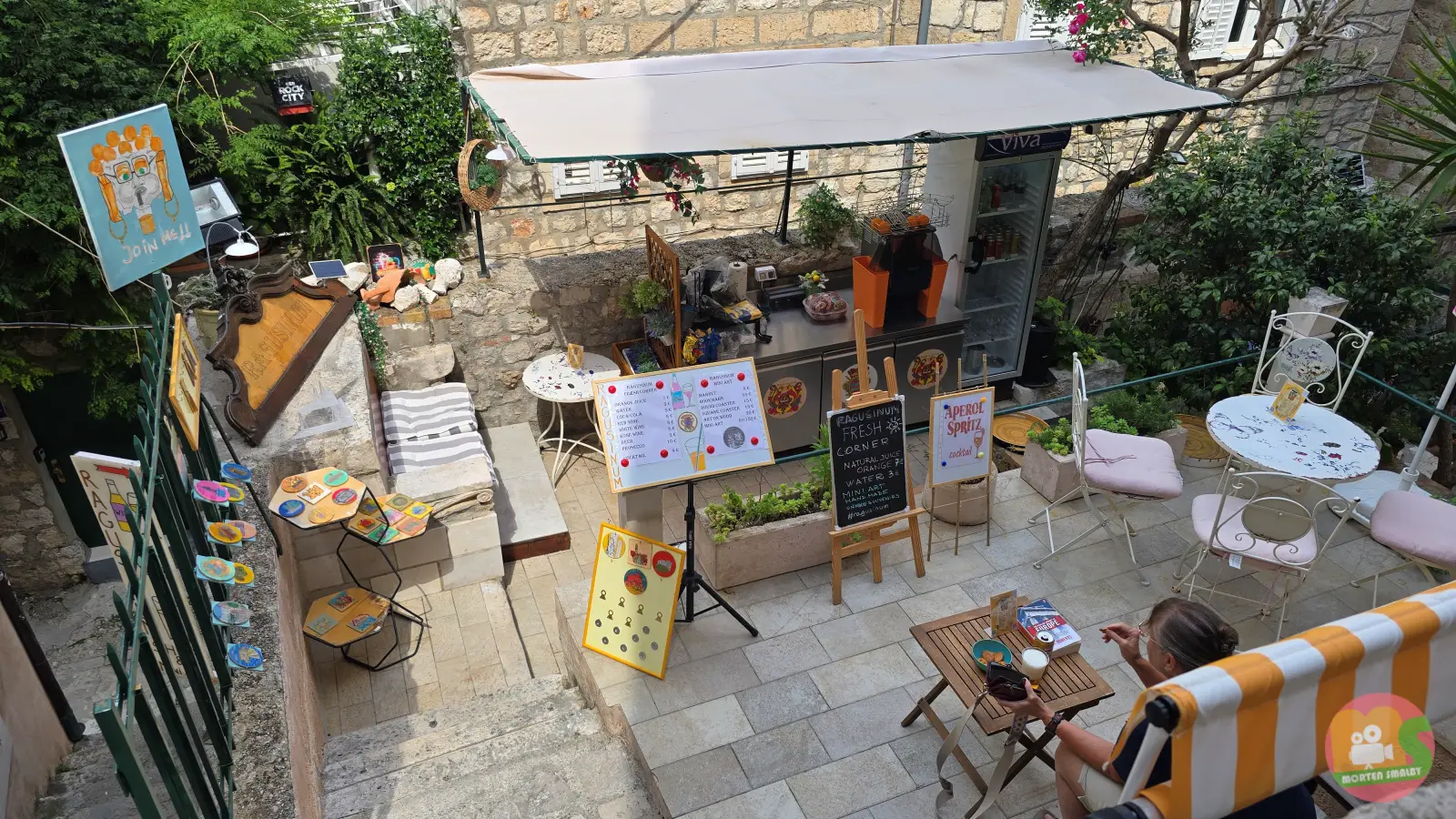
At the end of the street, turn right and walk along the archaeological site. At the end, turn right again and shortly after left, and now you should see Ragusinum Cafe in front of you, one of the coolest hidden gems in Dubrovnik’s old town.
Have a drink here and enjoy the shade before you continue your trip!
Od Puča and the shopping street
From Ragusinum, take Ul. od Domina down towards Stradun. The street parallel to Stradun on the south side is Od Puča. Next to Stradun, this is the street with the most shops: souvenirs, jewellery, bags, local art, a few small supermarkets, a hairdresser, a Christmas shop, and of course Game of Thrones shops. There are several of those. Like on Stradun, the signs on the corners show you which restaurants are hiding up the side streets.
Walk along Od Puča towards the east. At the end, you will have the Rector’s Palace in front of you. Here you turn left and cross Stradun.
Prijeko, the restaurant street
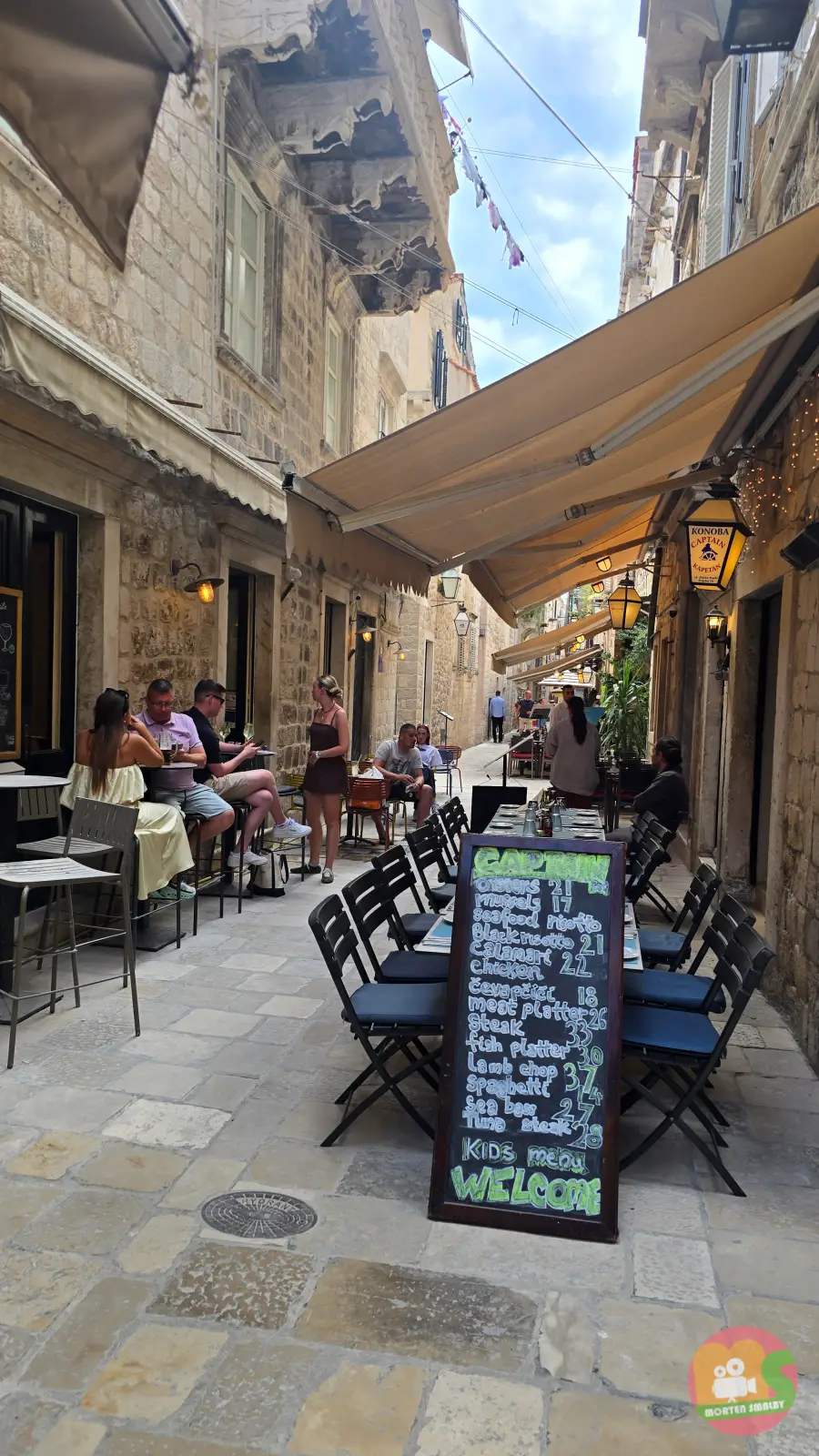
On the north side of Stradun runs Prijeko, which I think is the street with the most restaurants and bars in Dubrovnik. It goes almost from one end of the old town to the other, and I stopped counting at ten restaurants and bars.
In total, there are more than 70 restaurants and (coffee) bars in the old town of Dubrovnik. What makes Dubrovnik special is that you walk up some stairs, turn a corner, and suddenly there is a restaurant or coffee bar in a place you would never expect.
Prices on Prijeko, from the menus I checked:
- Pasta: around €20
- Spicy seafood dish: around €23
- Sea bass fillet: around €27
- Čevapčići: around €18
- Meat platter: around €26
Most of the restaurants here had main courses for about €20 to €30, so not totally crazy. Of course, there are more expensive places in the old town, but you can also find cheaper ones nearby.
The northern streets, Minčeta and the 4,000 stairs
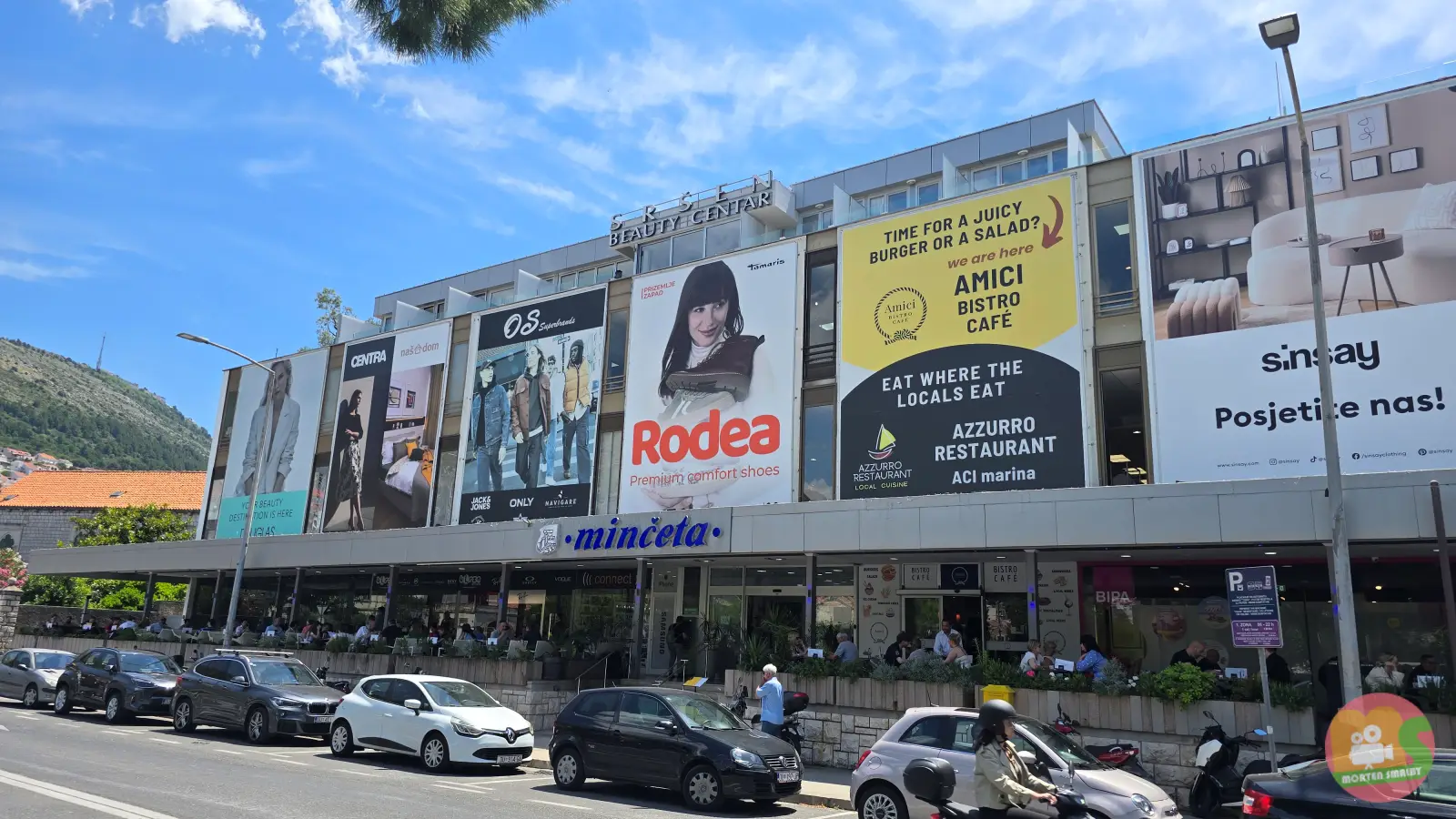
From Prijeko, 14 narrow streets go up towards the northern wall, and all of them are stairs. Lots of stairs. We took the last one to the west, leading to Minčeta Tower, the highest point of the wall in the northwest corner. It might be the longest of them all, so we did the extra work for you.
Here is a tip I wish more people knew before booking: if your apartment is in the upper, northern part of the old town, ask to be dropped off at Buža Gate (the northern wall gate). It will save you walking up a lot of stairs with your 30 kg suitcase!
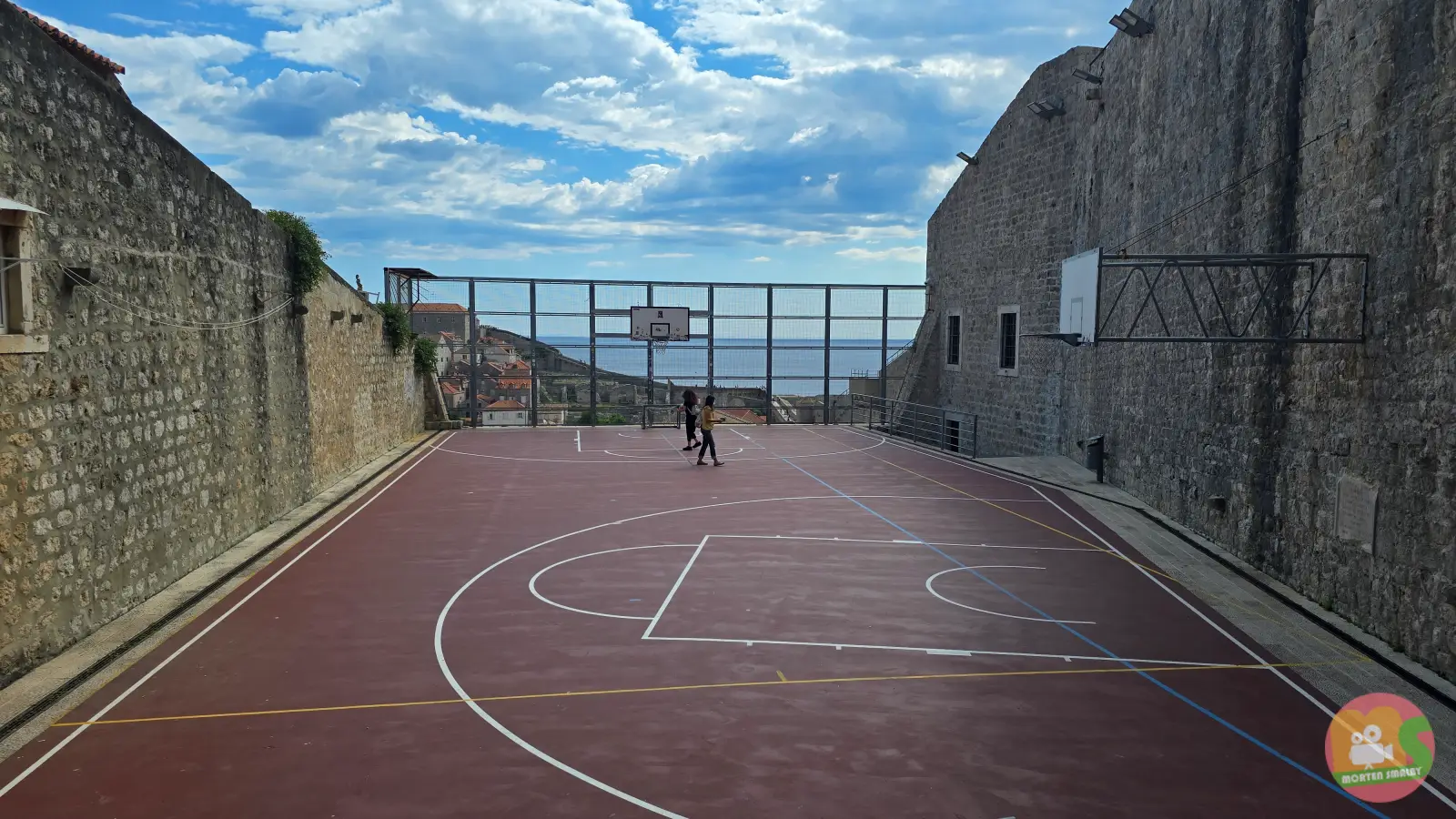
Near the top, there is also a basketball court squeezed in between the houses. There wasn’t enough space for a full size court, so they came up with a creative solution (see photo below). So if the stairs are not enough exercise for you, bring a ball.
Note: You can enter the Dubrovnik wall at Minčeta Tower, where you can also buy a ticket.
At the eastern end of the northern wall, walk back down to Stradun, and you have completed the longer walk around Dubrovnik! 🤗
About those stairs: nobody knows exactly how many there are. Some years ago an NGO counted around 5,400 steps in total, including about 1,080 on the wall. That leaves roughly 4,300 in the streets, but nobody is 100% sure. So if you want to be the person who solves the mystery, go ahead and count. Good luck deciding which ones count as a step.
The cable car to Mount Srđ
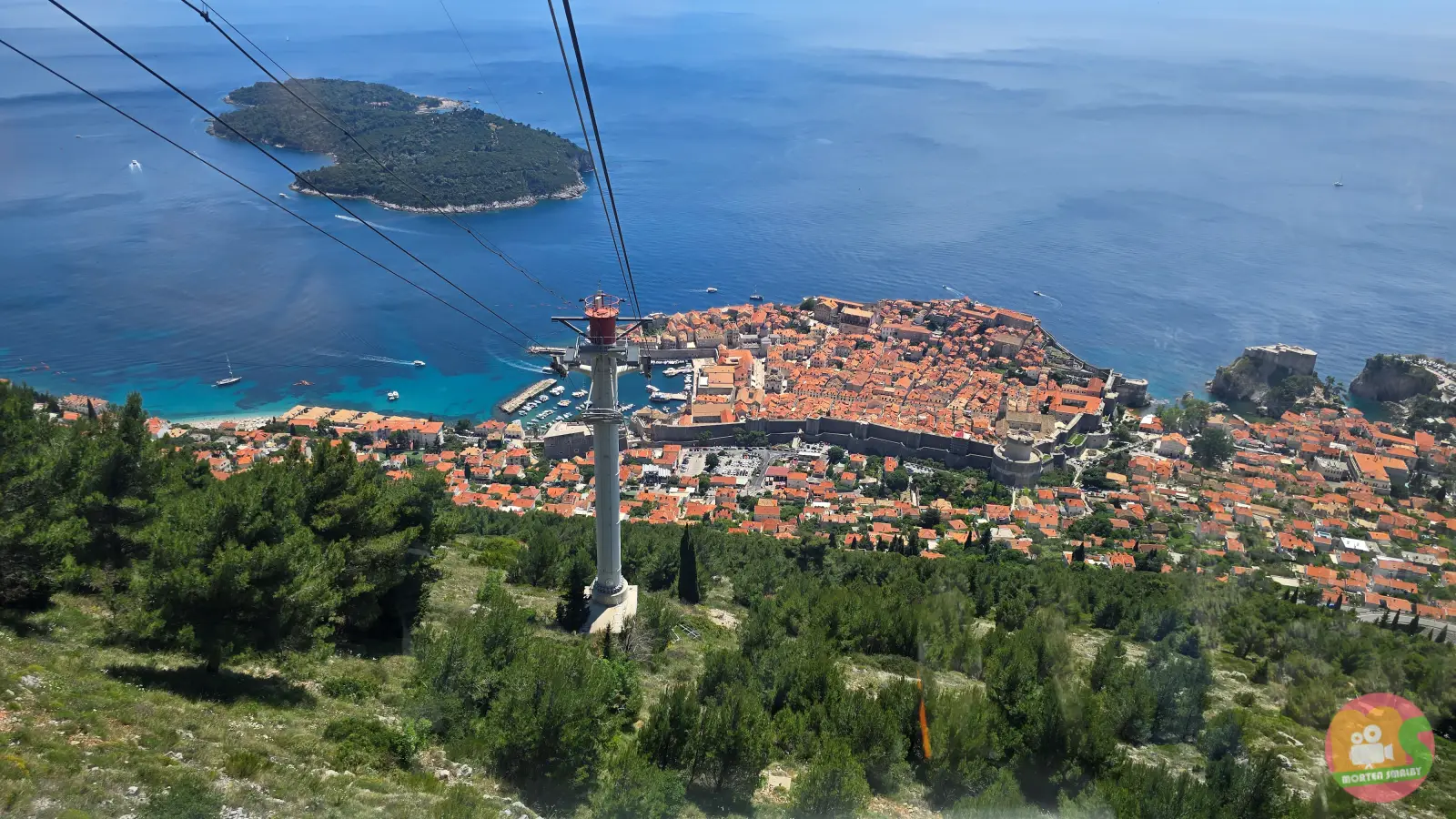
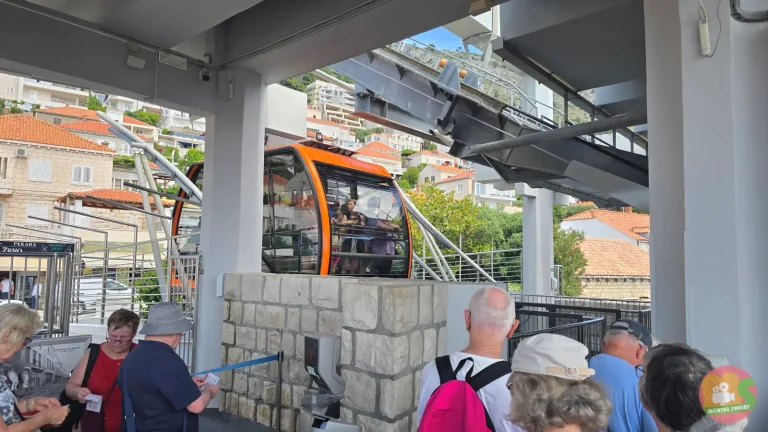
Another popular activity in Dubrovnik is a trip up Mount Srđ by cable car.
The cable car station is a bit north of the wall (uphill, of course 🫣). A return ticket was €30, and one way was €17.
The cable car runs until midnight in the main summer months, and until 11 pm in the shoulder season, so you could easily come up for sunset and have dinner at the restaurant at the top. I haven’t tried that myself, but I think it would be very nice.
If walking up and down the old town did not give you enough adrenaline, you can do a buggy safari or a zip line up here. The zip line is around 500 metres long and goes up to 70 km/h. The moment the guy said “70 km/h”, he had lost me.
Other ways up:
- Hiking: There is a trail all the way up from the city. Free, but sweaty.
- Car: Possible, and there is parking at the top.
- Taxi or Uber: From what I heard, it is relatively expensive, and not every Uber driver is keen on the drive up.
- Local bus: The cheapest option. Bus no. 17 goes to Bosanka, near the top, for a few euros, and then you hike the last part.
My verdict:
The view from Mount Srđ was amazing, but €30 is a lot. I think next time I will go up by car!
Dubrovnik beyond the old town
If you are staying in Dubrovnik, chances are you will not be staying in the old town, but in one of the other neighbourhoods. Below, I introduce the most popular ones.
Lapad
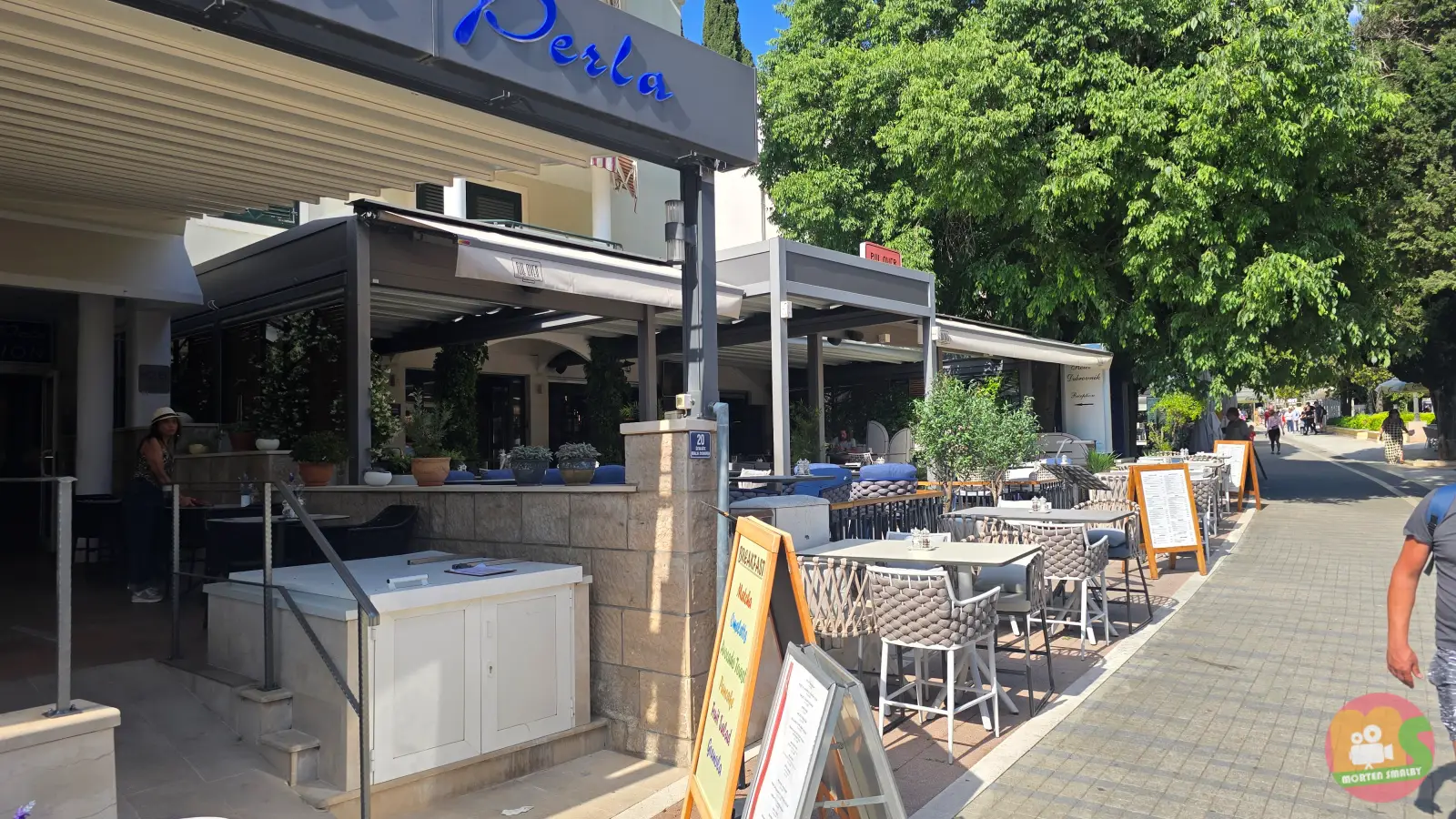
Lapad is the name of a peninsula in Dubrovnik, and it is also one of the nicest neighbourhoods in the city, especially for families. The pedestrian street (Šetalište kralja Zvonimira) running down to the bay is full of restaurants and bars, then souvenir shops, and at the end, the beaches.
During the day, there are noticeably fewer people than in the old town. The reason is simple: most of the crowds in the old town are cruise guests, and they never make it out here.
The prices are also friendlier. Pasta bolognese, a burger with chips or čevapi with chips were all around €15, so cheaper than what I saw in the old town. I also found local dishes like Dubrovačka pašticada on the menus.
If you go to Lapad beach, the shops along the way sell water shoes, and there is a reason for that. More about the beaches in my Dubrovnik beaches article.
Accommodation in Lapad is mixed: a few hotels, but also a lot of apartments, mostly cheaper than in the old town. The neighbourhood is great for couples and families who want easy access to the old town (by city bus) and like to stay in a vibrant area.
Babin Kuk
Babin Kuk is also on the Lapad peninsula and covers its outer part, next to the Lapad neighbourhood. The far end is mainly big hotels and resorts, while the part closer to town has residential areas with apartments. Along the bay, there is a completely new promenade with a marina and several restaurants (like Green Garden, a burger bar). It is a nice and calm walk, and much less crowded than anywhere near the old town.
In Babin Kuk, you will also find some of the most popular beaches in Dubrovnik, like Coral Beach and Copacabana Beach, which are both beach clubs.
The pedestrian street (Šetalište kralja Zvonimira) is technically on the border of the Lapad neighbourhood, and you can walk along the water from there all the way to the hotels and resorts at the head of the peninsula.
City buses also go to Babin Kuk, but less frequently, so check the Libertas timetable.
Gruž
Gruž is the port area of Dubrovnik. This is where you find the big cruise port, the ferry port and the main bus station, so you will probably pass through it at least once.
From the bus station, there are city buses to the old town, buses to the airport and buses to destinations all over Croatia and the region. If you arrive by plane, I have a separate article about how to get from Dubrovnik Airport to the city.
The waterfront is full of apartments, hostels and hotels, and there is a good chance you will end up staying here. The lively part is the street parallel to the promenade, with shops and fast food. From the end of the pier, fast ferries and car ferries go to the islands, and if you are heading to Mljet or Korčula, this is where you start.
Gruž also has its own green market, open from early morning, with fresh fruit, vegetables (many grown in the area) and fish.
Where to stay in Dubrovnik
Over the years, I have stayed in all parts of Dubrovnik, most often in Gruž, because that’s where I found the best offers. But this year, we stayed in a house in Mlini, and I really liked it: easy access to Dubrovnik and, at the same time, a calm neighbourhood.
- The old town: Unbeatable atmosphere, but expensive, crowded during the day and full of stairs. Check the elevation before you book, especially if you travel with heavy luggage.
- Lapad: My pick if you want to stay in Dubrovnik but not in the old town. Restaurants, bars, beaches and a short bus ride to Pile Gate.
- Babin Kuk: Calm, with big hotels and the new promenade. Good for a beach holiday, less good for evenings out.
- Gruž: Practical. Close to the bus station, the ferries and the boats. Not the most charming, but very handy if you plan day trips.
My thoughts about Dubrovnik
Dubrovnik is busy; it is expensive, and you will share it with thousands of people holding up their phones. And still, I think it is something everybody who likes history should see. I understand why some people do not want to stay in Dubrovnik, and I think a day trip is more than fine: 4 to 8 hours in Dubrovnik is enough for most people.
In my opinion, walking the wall is optional. Spending a day in the old town walking the route I suggest is way cheaper and still gives you the feeling of being surrounded by history.
And if you decide to spend a holiday in Dubrovnik, consider the other neighbourhoods. They are cheaper and more liveable. Of course, it’s charming to be inside the old town, but for a longer stay, no thanks!