For years I have been travelling between Split and Dubrovnik, and each time I looked at the wall of Ston from the coastal road, I kept repeating to myself, “One day you will have to visit and figure out why the wall is located in such a strange place.” I finally managed to do that in 2018, and recently I went back again.
What impressed me most about the wall was its size. I wasn’t aware that the Wall of Ston is the longest fortification wall in Europe (second-longest in the world). Of course, this is not the Great Wall of China, but trust me, you will be impressed! After visiting, the location of the wall now makes total sense to me 🙂
In my video, I show you Ston and Mali Ston, the salt pans, and of course me suffering as I climb the wall in Ston and walk to Mali Ston 😉
History of the Ston Wall
In the 14th century, the Republic of Dubrovnik acquired the Pelješac Peninsula. The reason for buying Ston was to get the salt pans, as salt was the “white gold” of that time. To protect the salt production and the peninsula, they started building the 7 km long wall. In the 15th century, the wall — with its fortifications and watchtowers, as well as the fortified towns of Mali Ston to the northeast and Ston to the northwest — was completed and thereby fully protected access to the peninsula from the land side.
Parts of the wall were destroyed when the Republic of Dubrovnik fell at the beginning of the 19th century. Further destruction followed, as people started using the wall as building material for other structures.
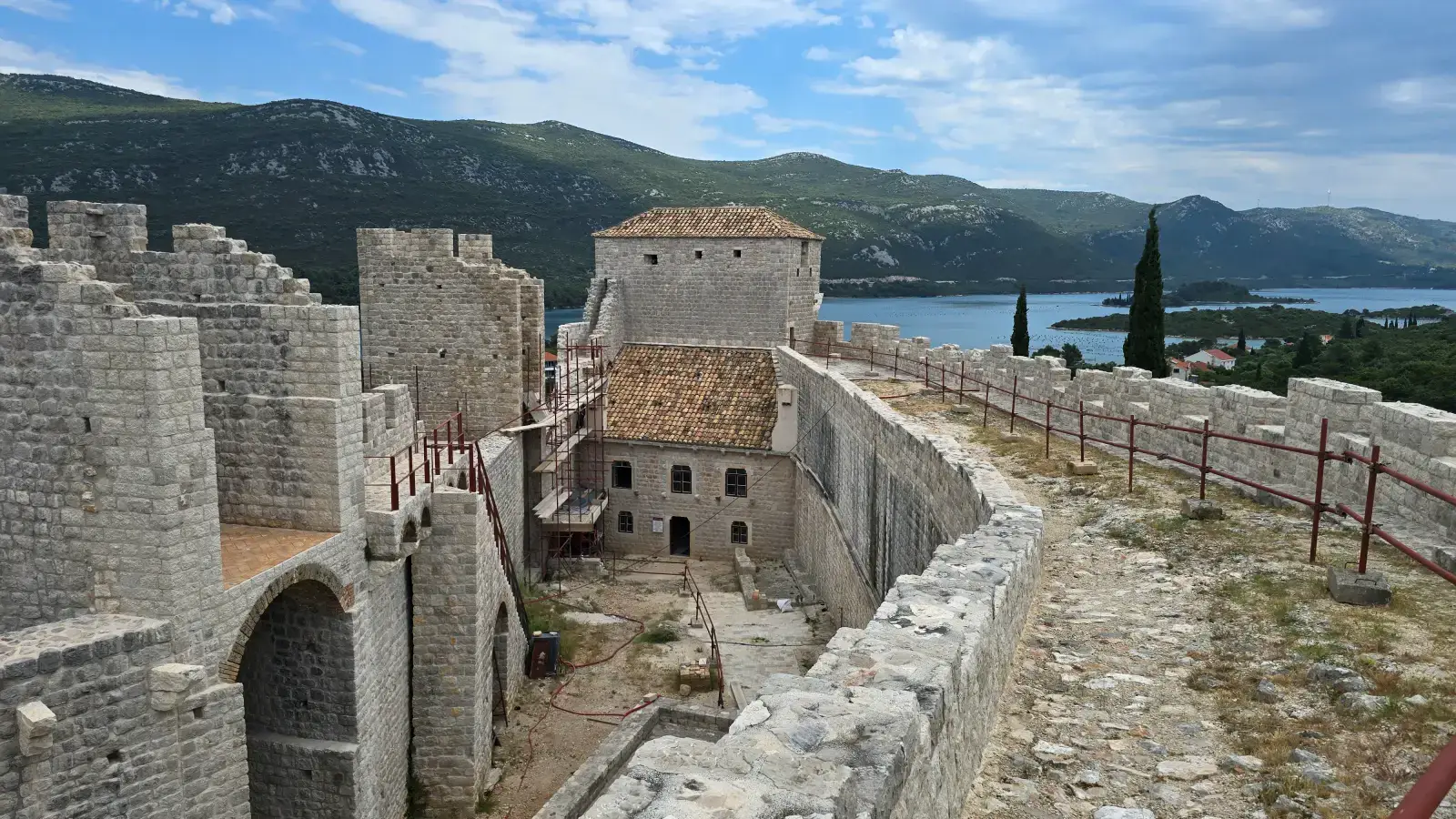
Today the remaining 5.5 km of the wall is protected, and in recent years it has undergone renovation. Parts like the wall towards the fortress at the highest point and Fortress Koruna in Mali Ston are still being restored, but Fortress Kaštio in Ston has now been fully renovated.
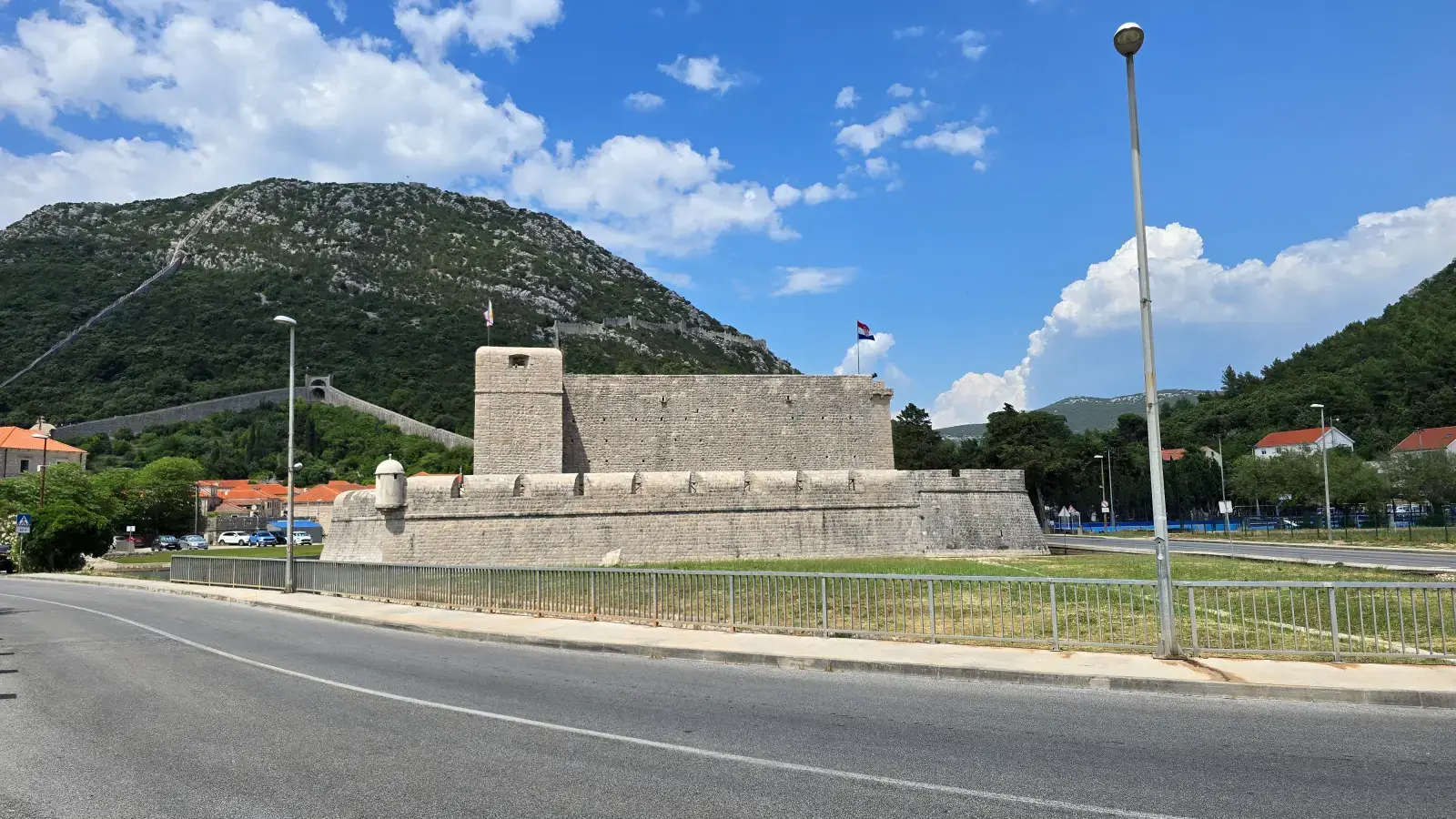
The towns of Ston and Mali Ston
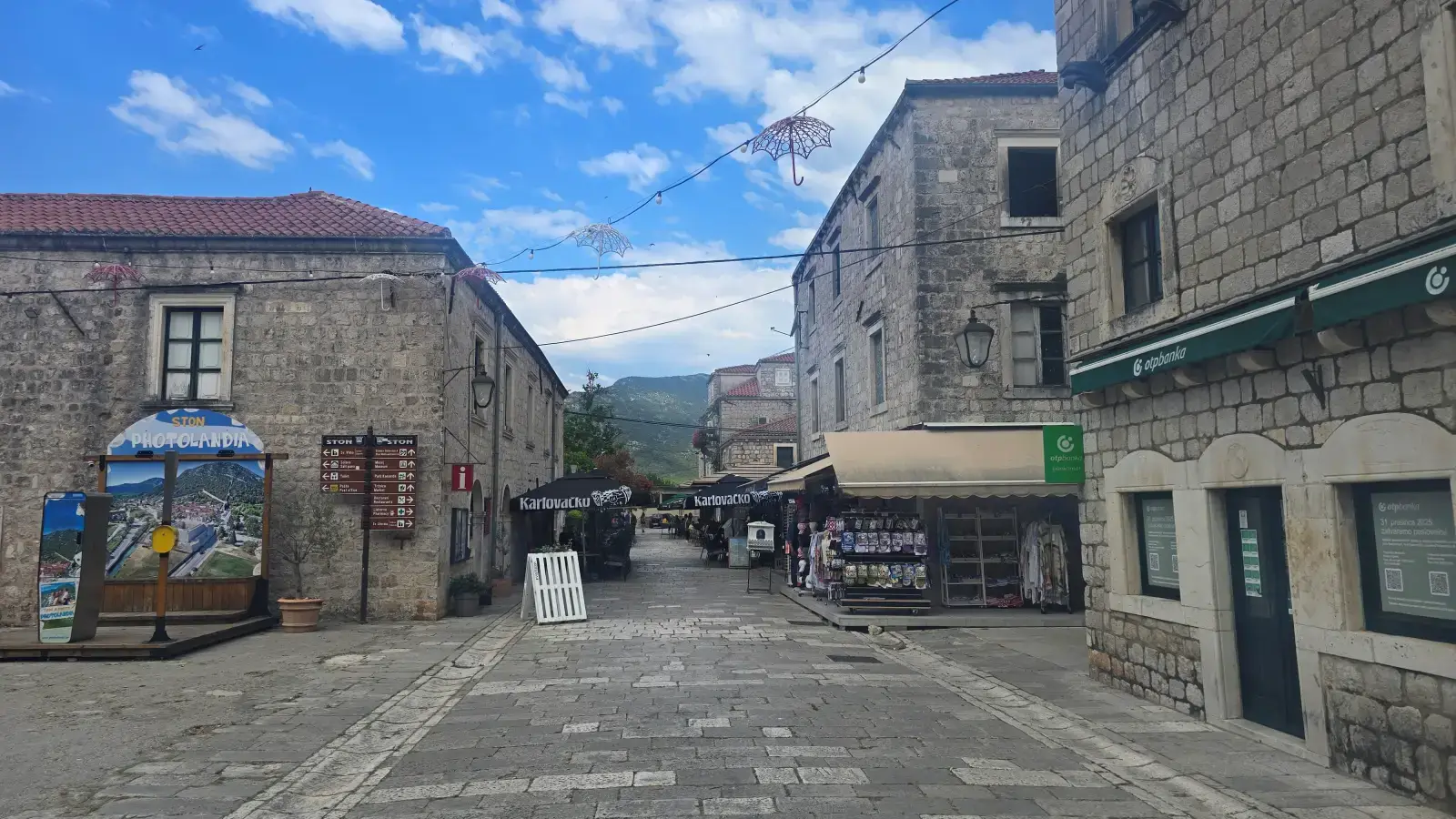
It is obvious that Ston and Mali Ston nowadays are tourist towns. The most common businesses you find are restaurants and souvenir shops.
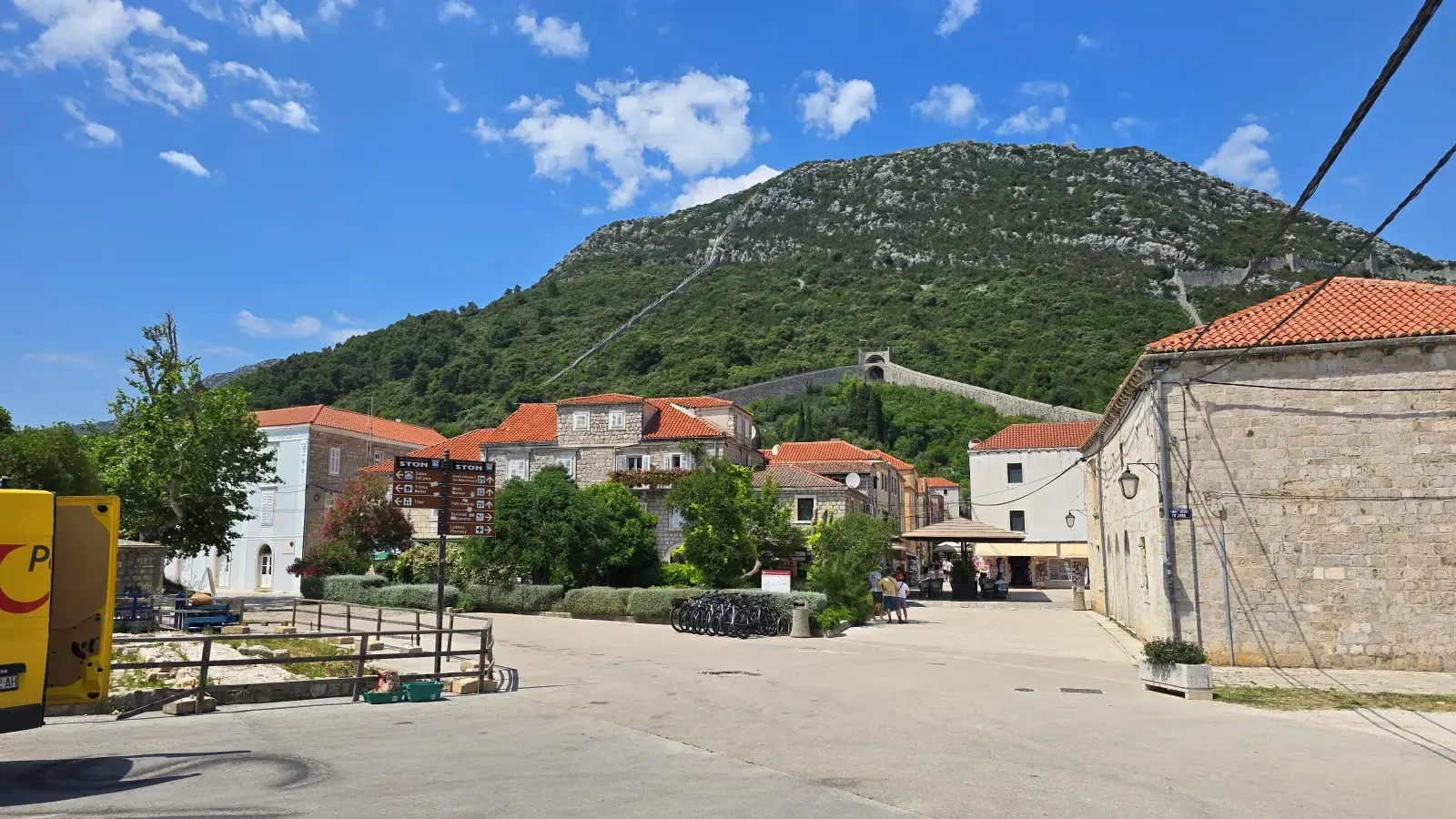
Ston, the one closest to the salt pans, is home to about 500 people. The “design” of the town, with three north–south residential streets and an east–west main street at the southern end, dates back to the 14th century, when the wall protected the town. Today, part of the population still lives in these streets (but in rebuilt houses). They don’t work in the salt pans anymore, as they did in earlier days.
In Ston you also find a police station, a larger paid parking area, Komarda Park, and two of the three entrances to the wall system.
Mali Ston is home to around 150 people. In addition to being part of the wall system, it is nowadays also known for the best oysters in Croatia.
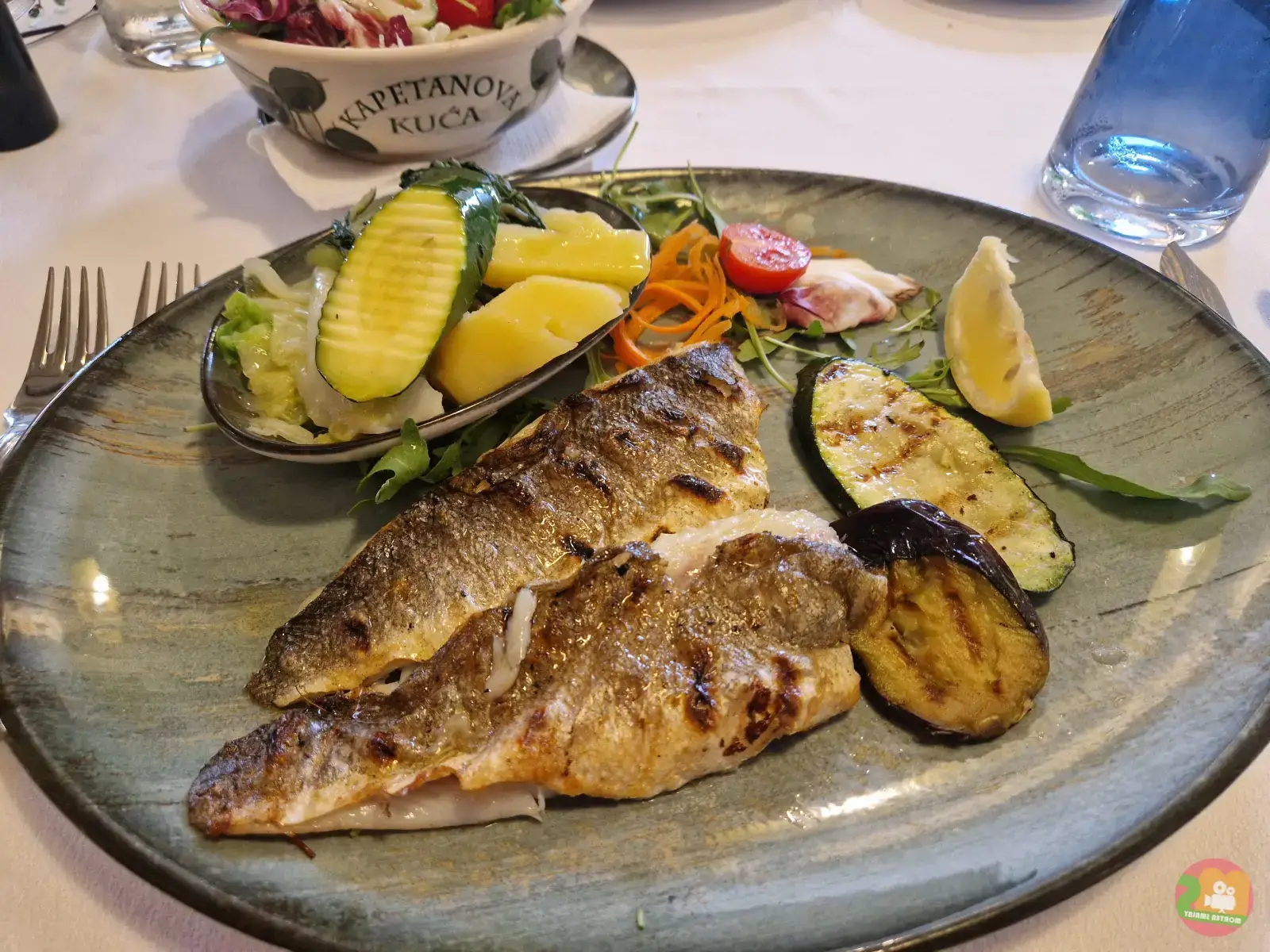
The restaurants Bota Šare, Vila Koruna, and especially Kapetanova kuća are well known throughout Croatia. The first time I had lunch in Kapetanova kuća was more than 15 years ago.
All three, as well as the other restaurants in town, are mainly fish restaurants serving oysters, mussels, and other fish dishes.
Several parking areas are available.
You can enter the wall system via Fortress Koruna.
Tips for walking the wall
If you want to walk the wall in Ston, the most important thing to pay attention to is the location of the sun. It is a bit more pleasant to start at the end where you do not have the sun in your face.
To walk on the wall, you need to buy a ticket at the entrance. The price for an adult is 10 euros, and 5 euros for kids between 7 and 18.
The walk between the two villages takes about 45–60 minutes, as there are lots of steps to climb (parts are quite steep), so you need to be in fairly good shape. Wear good walking shoes; flip-flops are not recommended. Also, do not forget to bring a bottle of water — and even two on hot days. Trust me, you will need it!
If you walk the full wall, you do not have to go back the same way. Along the road there is a walking path you can follow.
If you want a less demanding walk, you can take the shorter trip (see below), a triangular route above Ston.
The top of the wall is Fortress Podzvizd. It sits 224 metres above sea level. This part of the wall system is currently closed to the public.
My walk on the wall
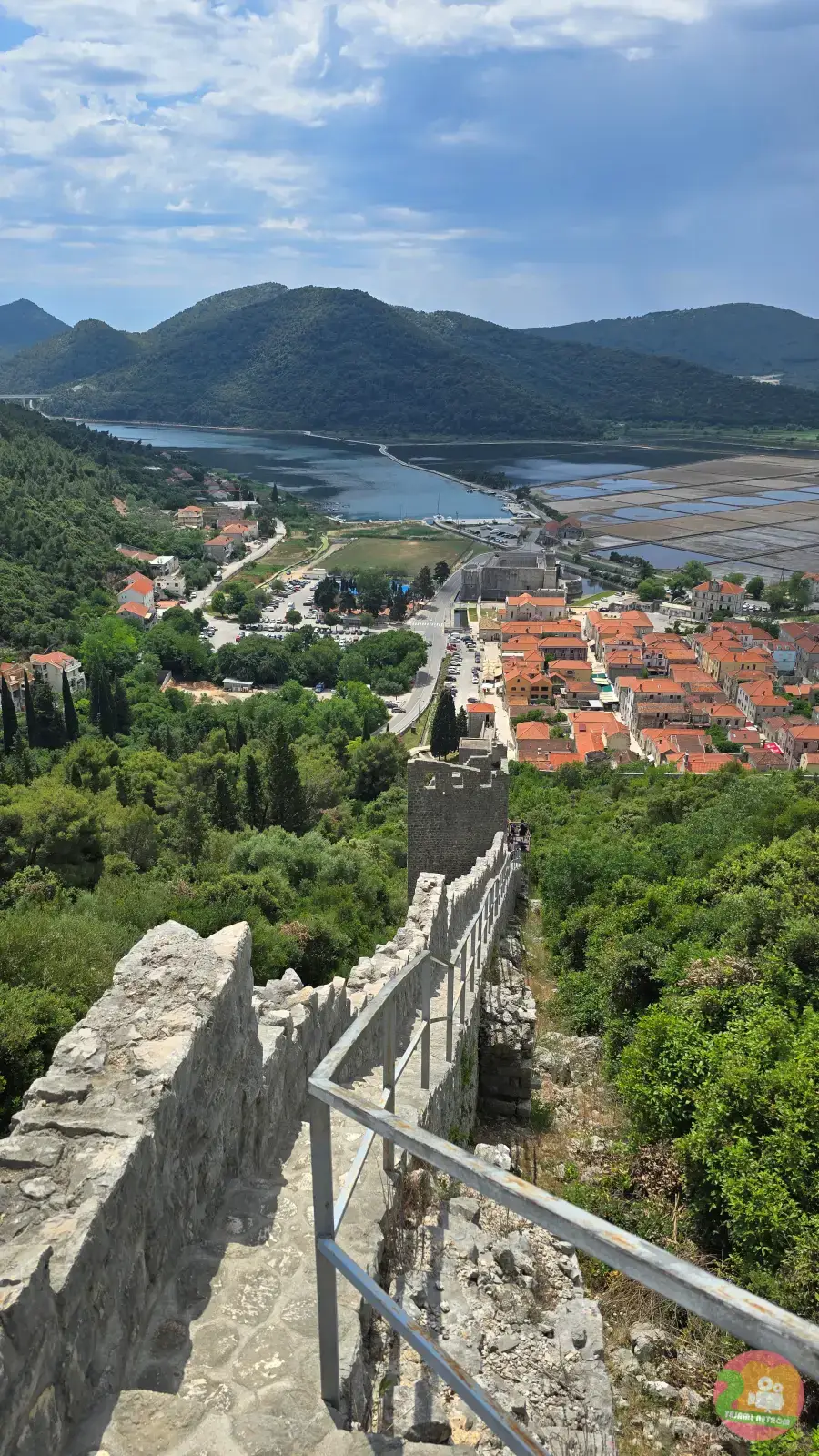
We started our walk at the western end, at Bastion Arcimun. From there we continued to Minčeta Tower, then to Stoviš Tower, and on to Nad vodom Tower (this is the short route you can take). From there we continued up the really steep part. The stairs seem to never end when you walk this stretch of the wall.
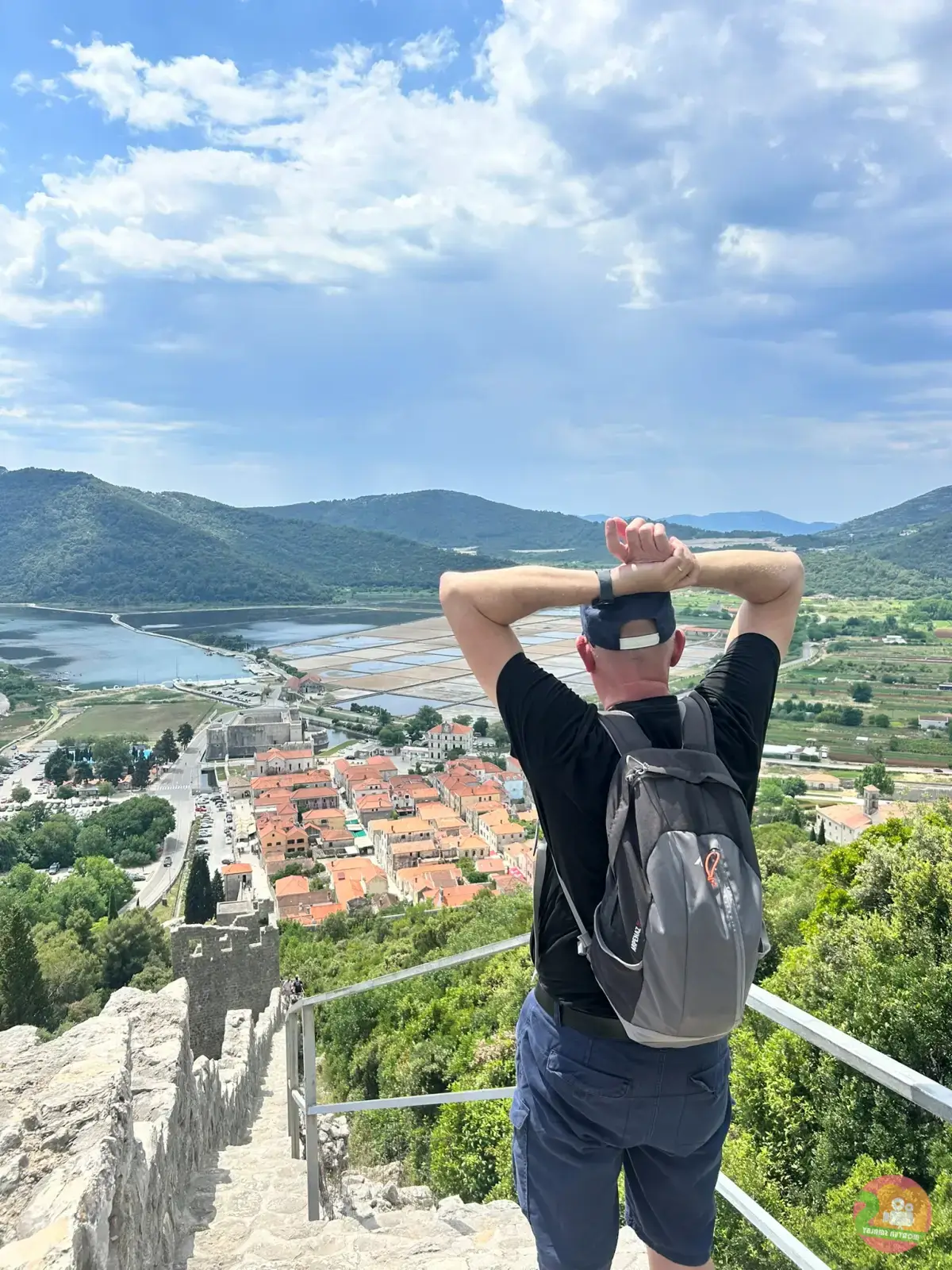
Halfway up, my condition looked like this!
The steep climb ends at an altitude of 123 metres. From here you start walking around the mountain, and the walk is less demanding, although you still need to pay attention: the pavement is quite uneven and full of rocks.
Along the way you pass several of the wall towers. If you look down into the valley, you get a good understanding of why the wall is placed exactly where it is.
Of course, my colleague and I managed to forget the water, so we had to take several breaks. Probably because of that, we also forgot to take photos. We were kind of focusing on making the video above, so sorry about that.
When we reached the Good Tower (Kula Dobri), we started the descent towards Fortress Koruna. The walk down on this side is less steep, as the descent is spread over a longer stretch of the wall. Still, the height of the steps is quite annoying. Sometimes they are 25–30 cm high, at other parts, only 10–15 cm, so you never really get a walking rhythm and have to watch every step.
After about 55 minutes, we reached Fortress Koruna. The last time I saw it was in 2018. Back then there was a temporary exit before the fortress. This time we could actually walk through the fortress to leave the wall.
After we exited the wall, we explored Mali Ston and walked along the road back to Ston
Note to whoever is responsible in Ston: maybe add some signs on how to exit at Fortress Koruna. It was a bit confusing, and not only for us.
Who should visit Ston and how?
If you like history, a bit of hiking, or oysters and fish, Ston is worth a stop.
Don’t go if you expect a bustling tourist town, great beaches, or a place to do some shopping.
Walking the wall is almost a must when you are in Ston. If you are not in good enough shape for that, you can still enjoy a half-day visit: the two towns, the salt pans, and a long lunch in Mali Ston.
If you are driving between Split and Dubrovnik, or heading towards Korčula from Dubrovnik, Ston is only a short detour. In that case, you should stop.
From several places along the coast, you can also join group tours to Ston, often combined with other sights. Fine if you have no car — just be aware you will have less time on the wall.
Should you stay in Ston?
Ston and Mali Ston do have hotels and apartments — but is it really a place to stay?
If you are in Croatia for sun and beaches, I would definitely say no.
If you are hopping around Croatia with short stops in several places, an overnight stay is more than fine. You can have a nice oyster dinner in Mali Ston and maybe catch the sunset over the bay.
From June to September you can apply to work as a volunteer at the salt pans as part of the Summer Camp. As far as I recall they provide food and accommodation, but check that directly with them. More information here:
In September, the Ston Wall Marathon takes place. That can be a good time to stay if you like competing with like-minded people.
Also in September, the Festival of Salt is held in Ston. It runs over two weeks with a packed programme, so that could be another good reason to stay overnight.
Also see when you visit the Ston Wall
On our recent trip we also spent some time walking around Ston. We saw the park, visited Kaštio Fort, and last but not least went to the salt pans. All of this is within walking distance.
If you arrive by car, you can combine Ston with the following:
- A turtle walk in Stonsko Polje (the “food chamber” of Ston). It is one of the few places where the Balkan terrapin still lives.
- A visit to some of the many good wineries on Pelješac.
- A trip to Mljet or Korcula, two nearby islands you can reach by car or fast ferry from Pelješac.
- A visit to Bosnia and Herzegovina. From Ston, this is possible as an extra stop, especially via the Neum area, if you have time for the border.