
I finally made it to Mljet, a destination that has been on my bucket list for over 20 years. I even managed to visit Mljet Island twice within the same week!
Did Mljet disappoint me? Not at all. On the contrary, I loved the island and its National Park, and I will definitely be coming back — possibly for a longer stay next time.
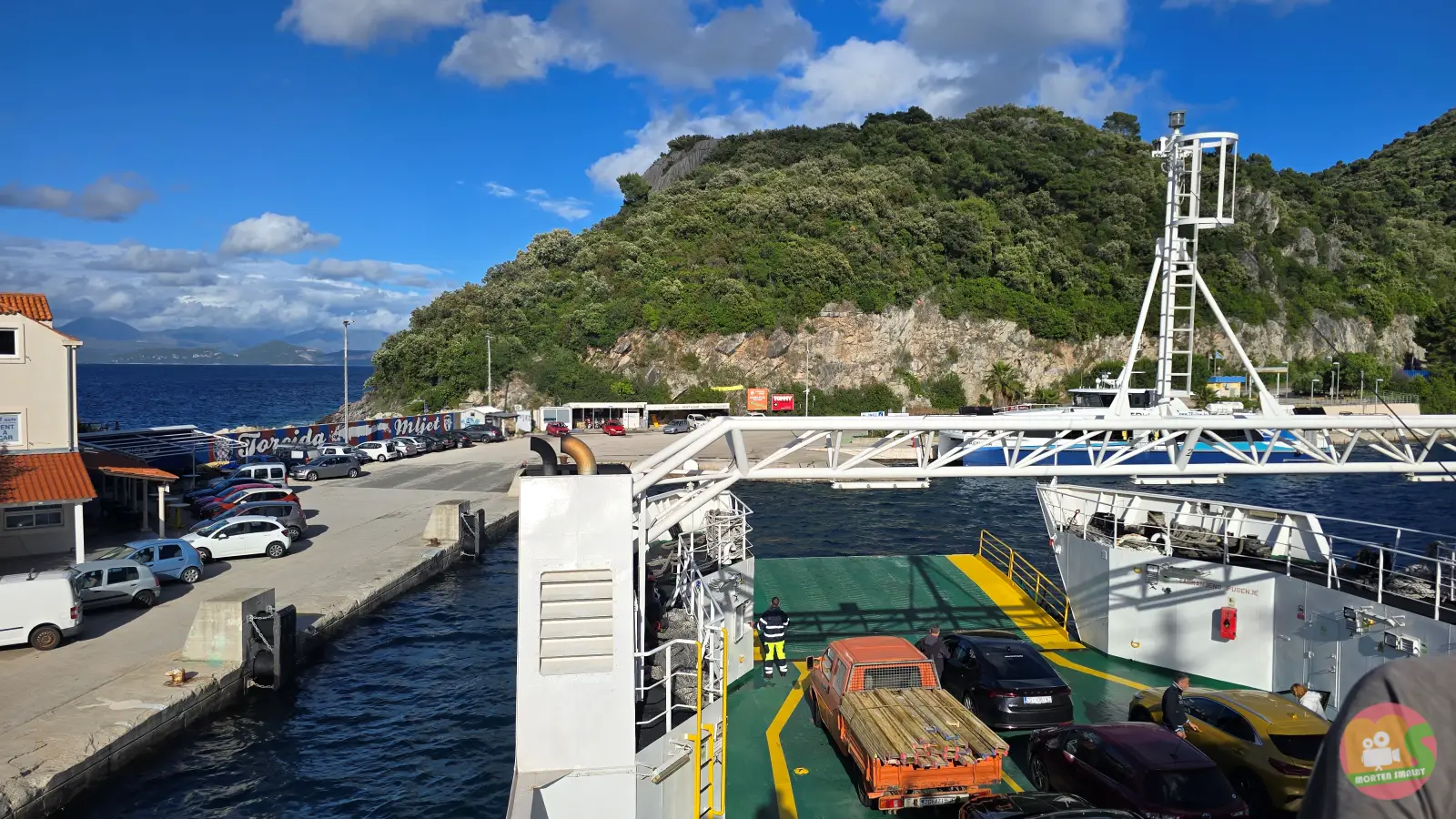
Since we wanted to see as much of Mljet as possible, we planned a three-day stay and brought our car on the ferry from Prapratno to Sobra. We chose Pomena as our base on the island, which is located at the northwestern end of the 37-km-long island. During our visit, we explored the National Park, Pomena, Polače, the Odysseus Cave, and drove around the island. In the video below, you can get a visual impression of our trip.
About Mljet
Mljet Island is the largest island in southern Croatia. It covers approximately 100 km², is 37 km long, and up to 3.2 km wide. The island has more than 130 km of coastline.
The ancient Greeks called the island Melita (meaning “Honey”), a name it shared with Malta. In the 12th century, the Benedictines became the rulers of Mljet. It later became part of the Dubrovnik Republic, then Napoleonic France, the Austro-Hungarian Empire, and eventually, Croatia.
Some Interesting Facts About Mljet
- The island has a population of around 1,000 people, who live in 14 small settlements.
- The Austro-Hungarian Empire introduced the Indian mongoose to the island to control the snake population. Today, there are no venomous snakes left on Mljet.
- Mljet is often called the “Green Island” because more than 80% of its surface is covered in forest.
- Since 1960, Mljet has been home to Mljet National Park.
Practical Tips
- Getting around requires a car. Uber and Bolt are bookable in the app, but according to locals, drivers rarely show up. Island buses (Arriva) run only once or twice a day. Without a car, getting between villages is difficult and/or expensive.
- Bring supplies from the mainland if possible. There are small supermarkets in Sobra, Polače, and Pomena, with the largest near Babino Polje — but not every village has one.
- Day trippers without a car: head to Pomena — the National Park entrance is nearby, and the main attractions are within easy reach on foot, within 4 to 5 hours.
- Day trippers with a car: take the ferry from Prapratno to Sobra for much more flexibility and the ability to explore the whole island.
Pomena
As mentioned above, we chose Pomena as our base for a three-day visit to the island. We picked it because it lies within the National Park and has the shortest distance to the lakes.
Pomena is a very small settlement with only 62 inhabitants, but it didn’t feel small to me. I was impressed to count more than 10 restaurants, which gives a good indication of the number of daily visitors the village welcomes during peak season.
We stayed at Apartments Slavica, located at the head of the bay. From our balcony, we enjoyed a beautiful view of the bay.
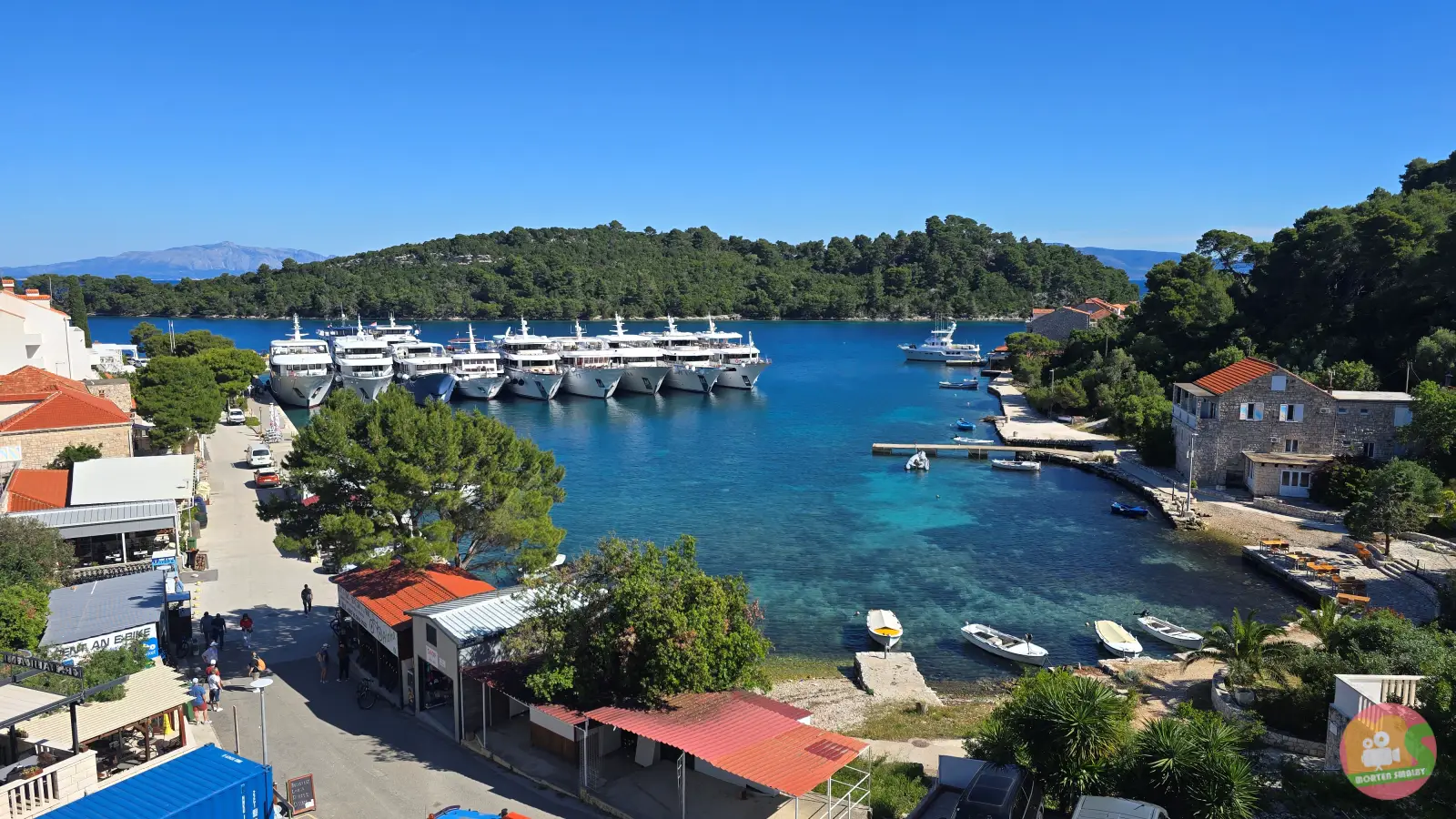
The boats you see in the image are gulets — “mini” cruise ships that typically carry around 30 passengers. Locals told us that up to 15 of these boats can arrive daily. In addition, several fast ferries dock here each day, which explains why so many restaurants are needed.
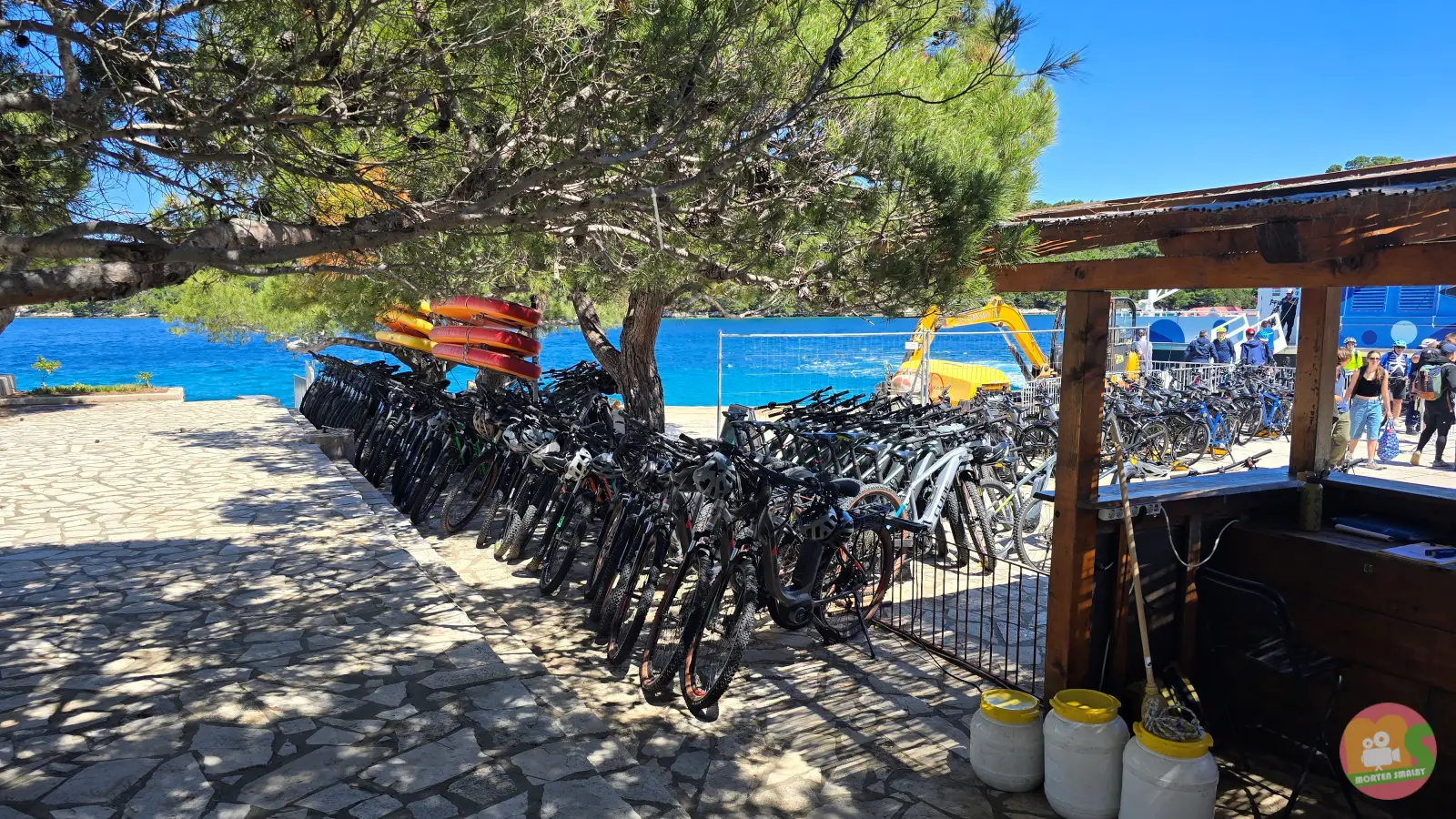
The second most popular tourist service in Pomena is bicycle rental (both traditional and electric). We rented bicycles ourselves — more on that below.
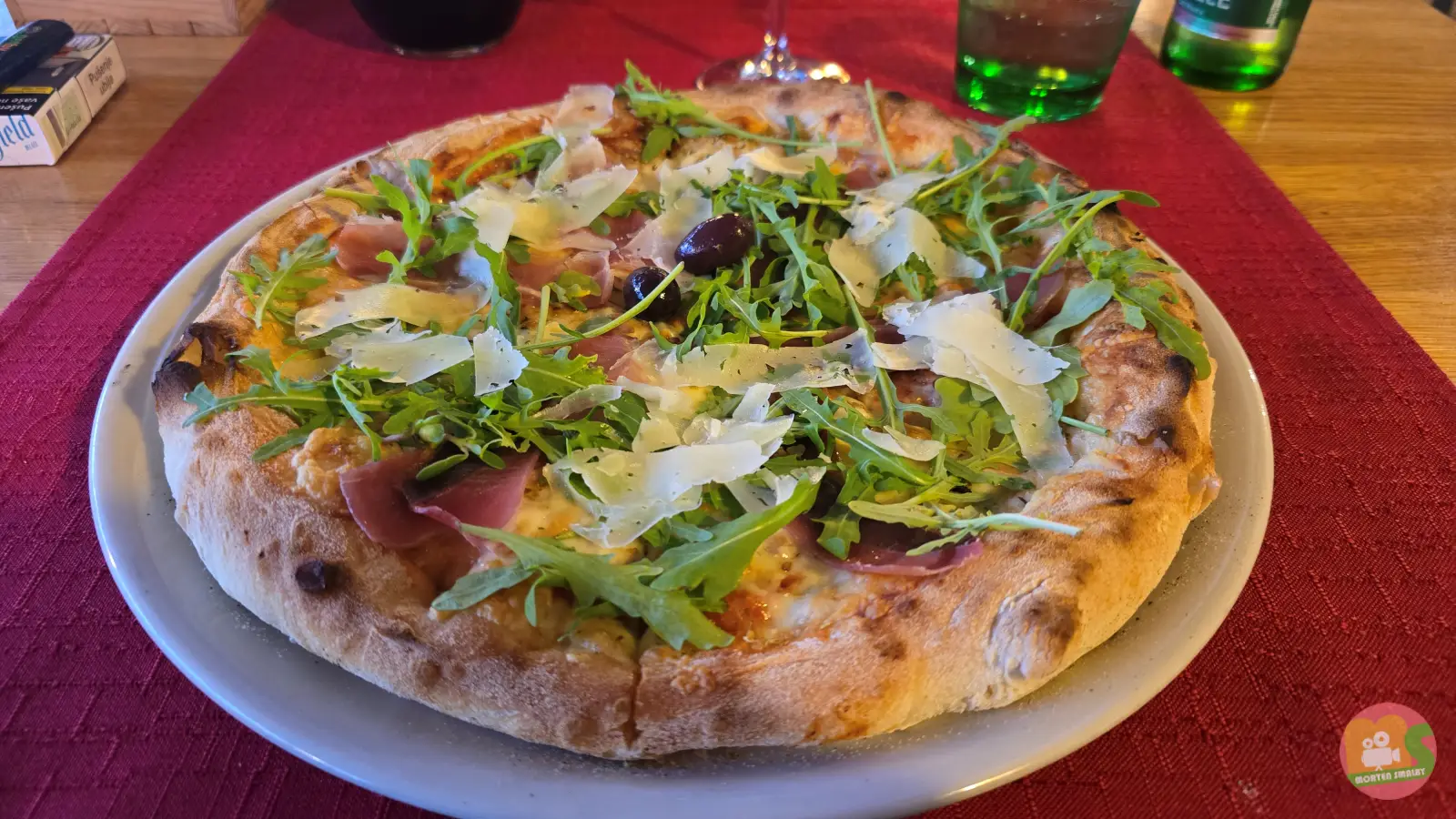
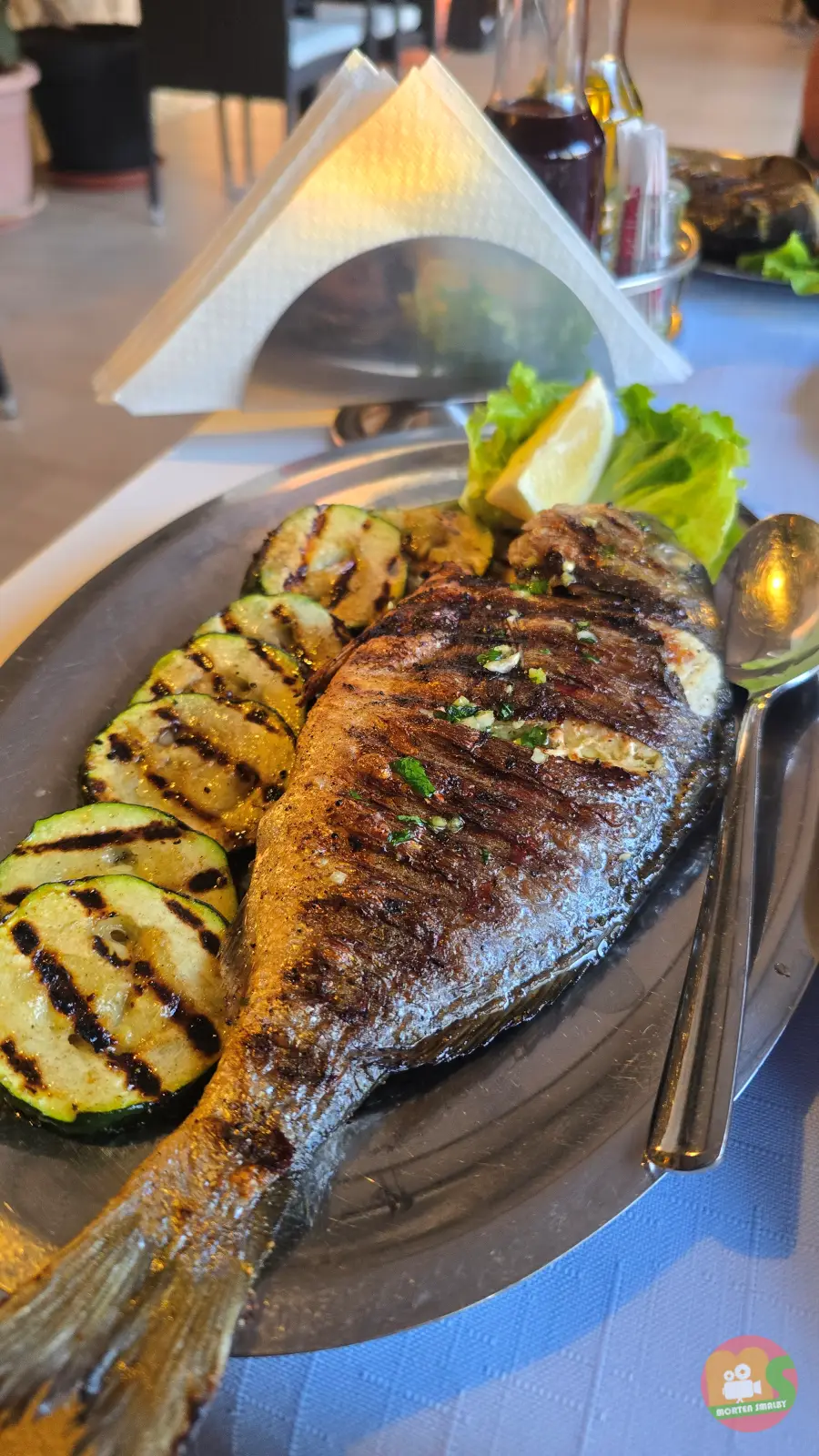
During our stay, we enjoyed a great lunch and dinner at Restoran Pizzeria Adriatic, and one evening we had an excellent dinner at Konoba Ana.
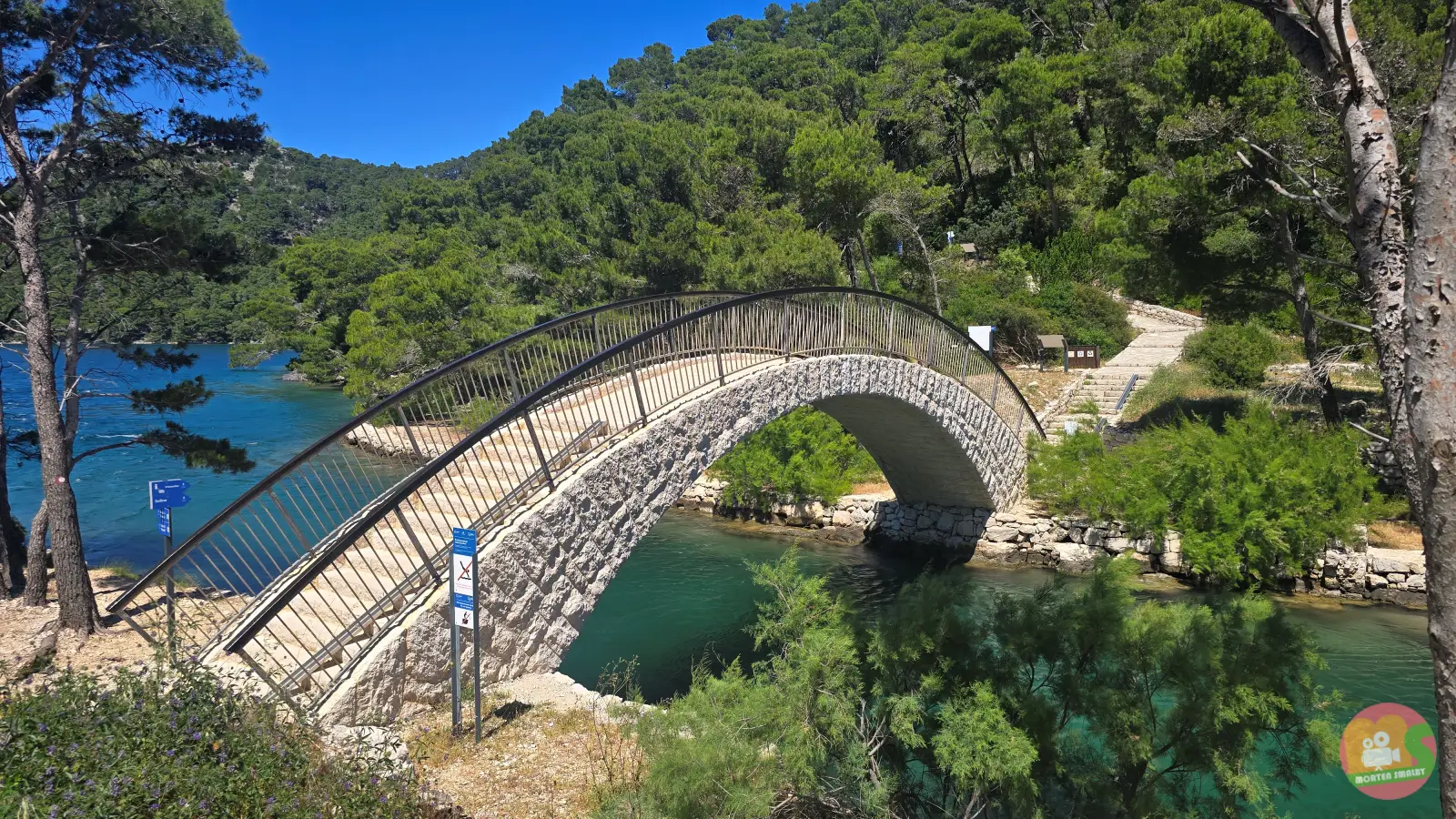
From Pomena, there are 900 metres to the small lake and 1.2 km to the small bridge (Mali most). Note that the terrain is uphill and downhill.
Polače
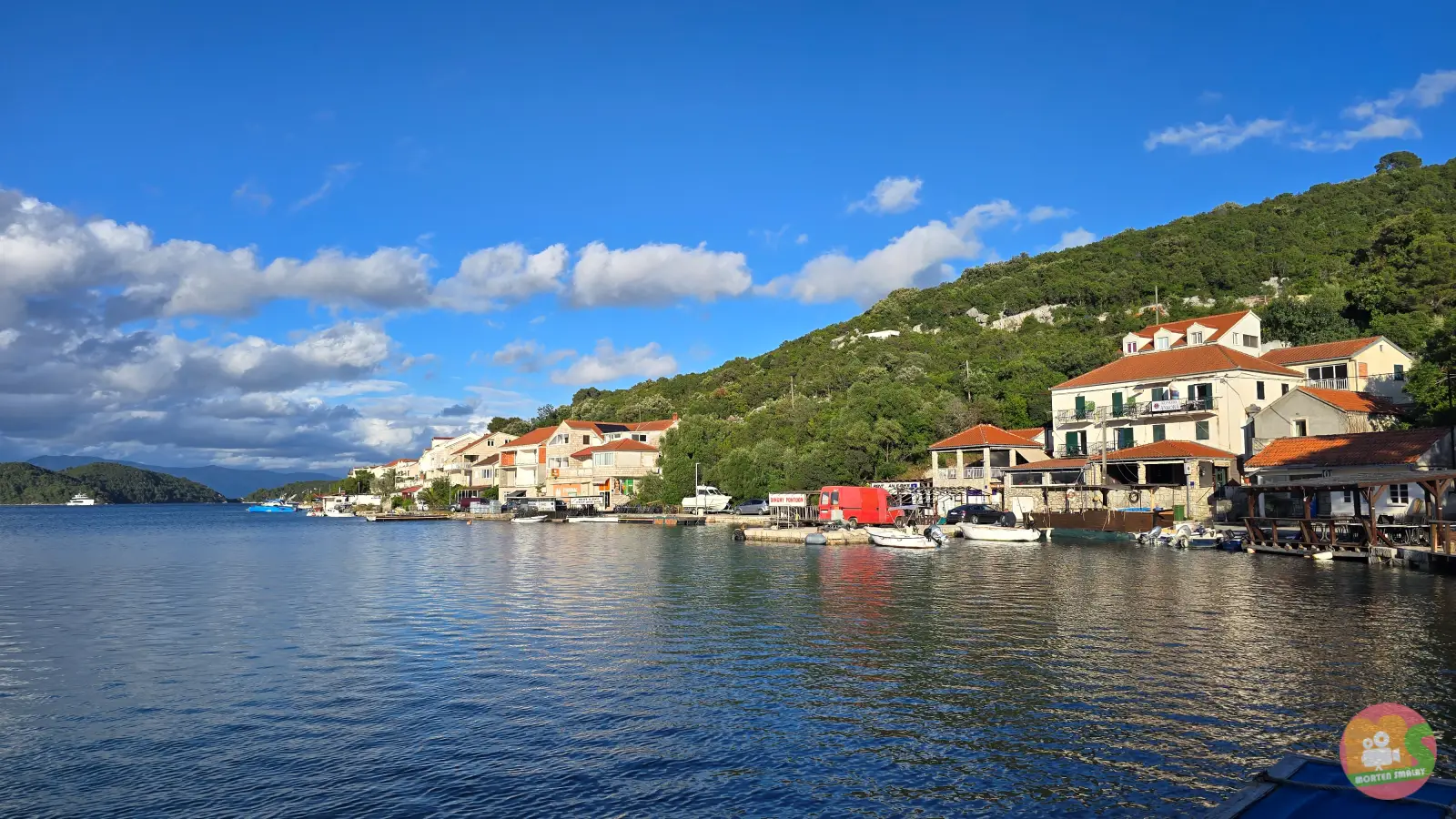
Another place we visited was Polače, which is also located within the National Park. Polače lies in a well-protected bay facing the Pelješac peninsula. Like in Pomena, the tourist industry here centres around restaurants and bicycle rentals.
Polače is a bit larger than Pomena and stretches along the bay, so about 75% of the houses in the settlement are seafront properties.
Unlike Pomena, Polače is not full of gulets during the summer season. Instead, many yachts anchor in the bay.
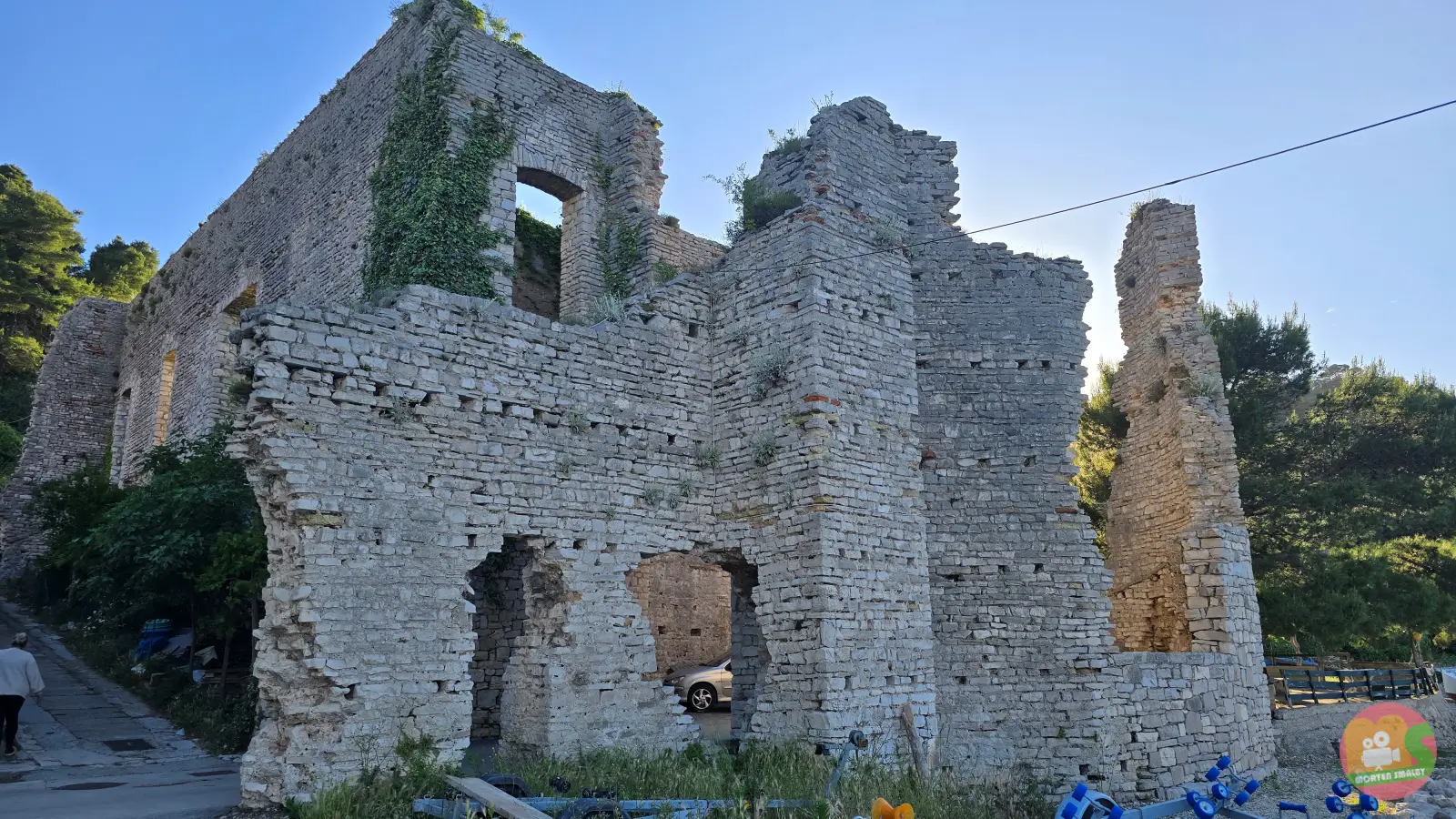
The main attraction of the settlement is the remains of a Roman palace, which is the third-largest Roman building in Croatia after Diocletian’s Palace in Split and the Arena in Pula (excluding Salona). East and west of the palace are two 5th-century basilicas. We visited one of them but could not find the other, as there were no signs showing the way.
From Polače, there is a 2.5 km walking/bicycle distance to the main entrance of the National Park (3 km to the ferry to St Mary Island). Note that the terrain is uphill and downhill.
In general, I found Polače very pleasant, but I liked Pomena more — probably because of the livelier atmosphere created by the many gulets bringing in guests. This might be different during the main season.
National Park Mljet
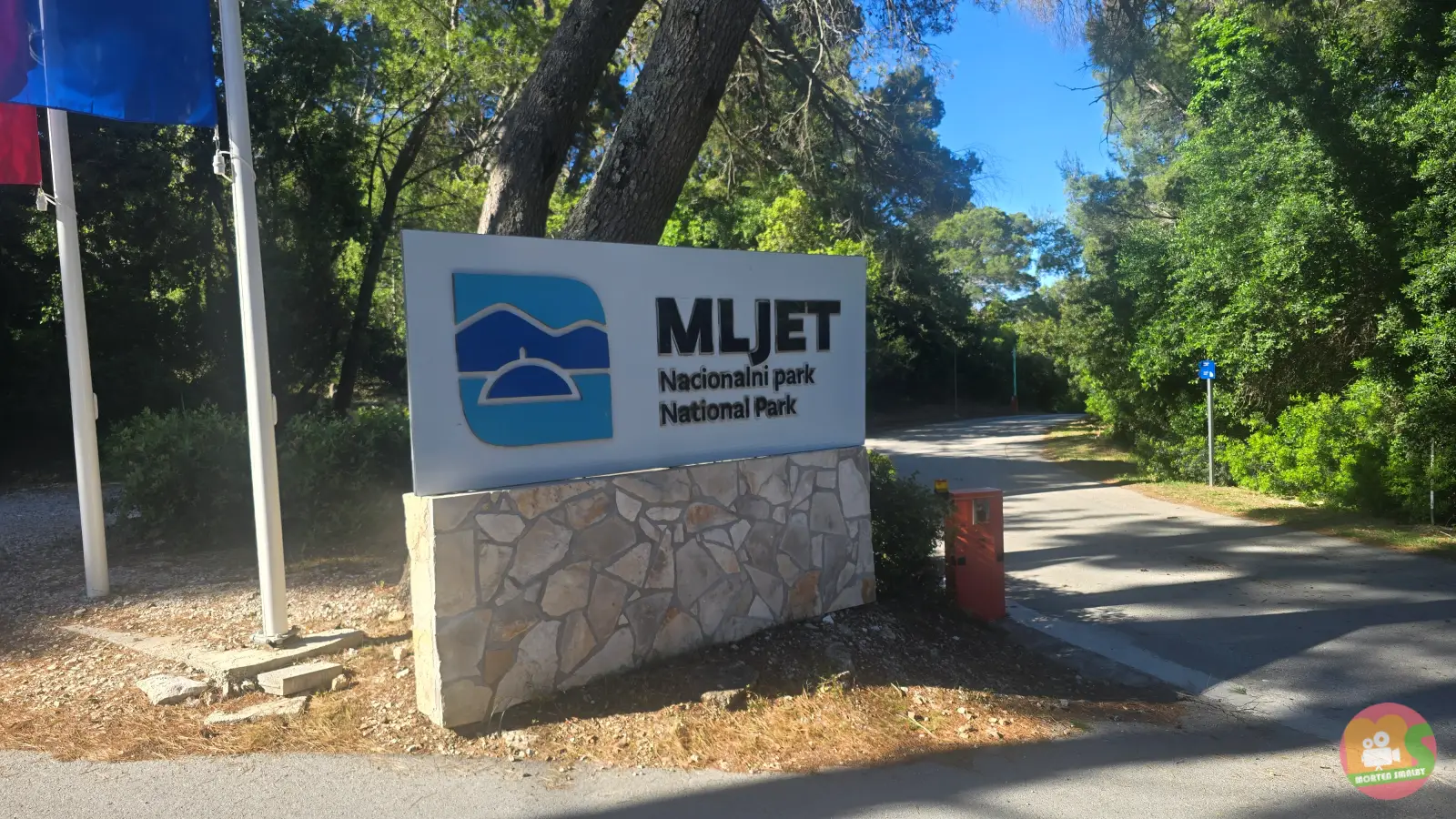
One of my key reasons for visiting Mljet was, of course, to explore the National Park. The park, which covers roughly 25% of Mljet’s landmass and an even larger sea area (including several islets), was established in 1960.
As mentioned, our base on Mljet was Pomena, which lies inside the National Park. Other villages within the park include Polače and Goveđari, as well as the tiny settlements of Banina Kuća and Soline.
National Park Tips
- A ticket is required the moment you enter the National Park area — whether you’re anchoring a boat in Polače, arriving on a gulet in Pomena, or staying in an apartment inside the park boundaries.
- Tickets cost €30 (1 June – 30 September) and €20 the rest of the year. Discounts apply for children, students, and other groups.
- For multi-day stays, buy one ticket and tell the staff — they’ll mark it as valid for multiple days.
- Always keep your ticket with you. We were asked to show ours three times during our three-day stay.
Tickets can be purchased at the National Park offices in Pomena and Polače, at the ferry port for St. Mary’s Island, or at the main entrance near Goveđari. There are also ticket vending machines in several locations
Tickets are also sold on the national park’s website, but there were technical problems when I tried to purchase.
St Mary Island and Monastery
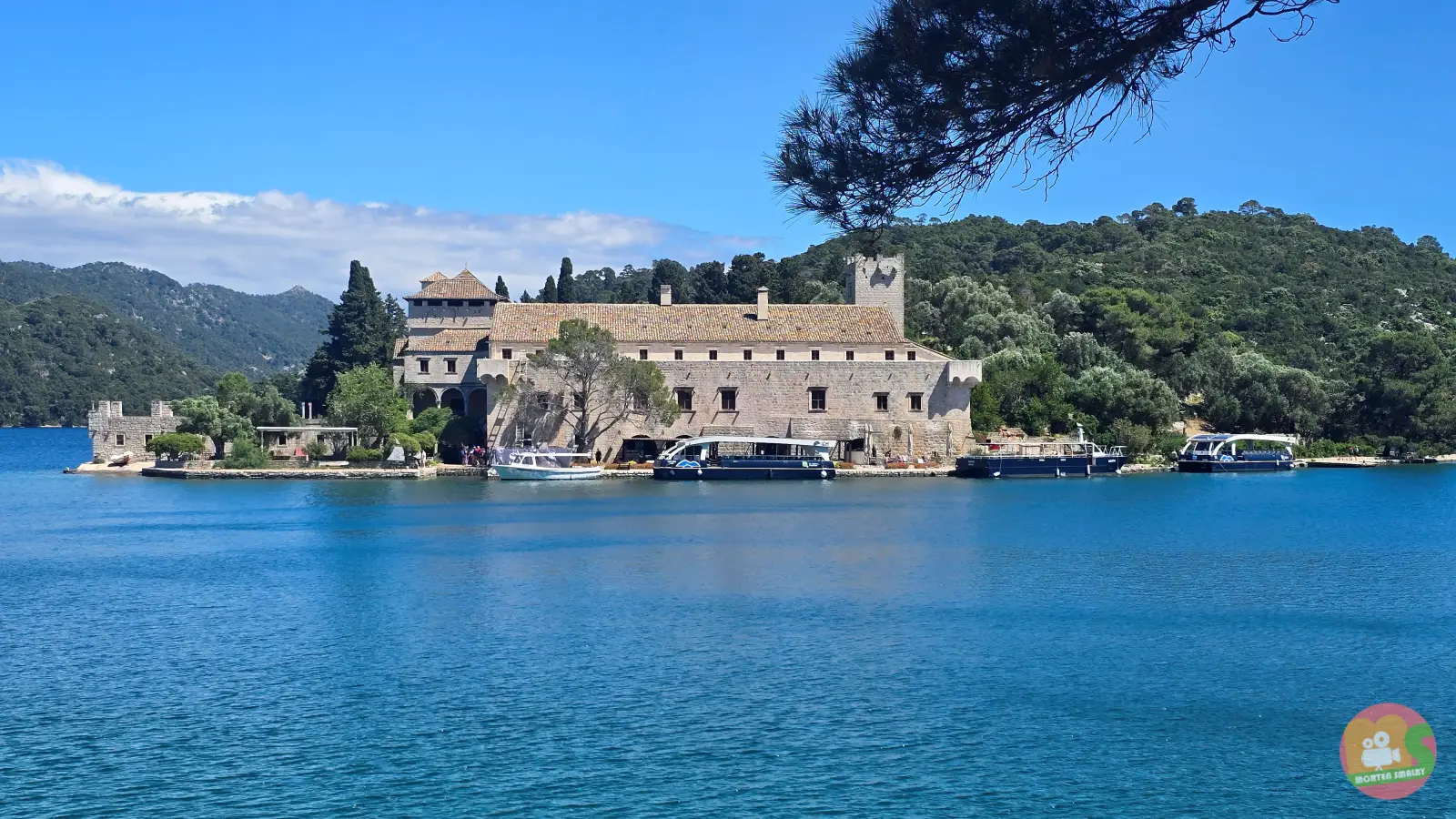
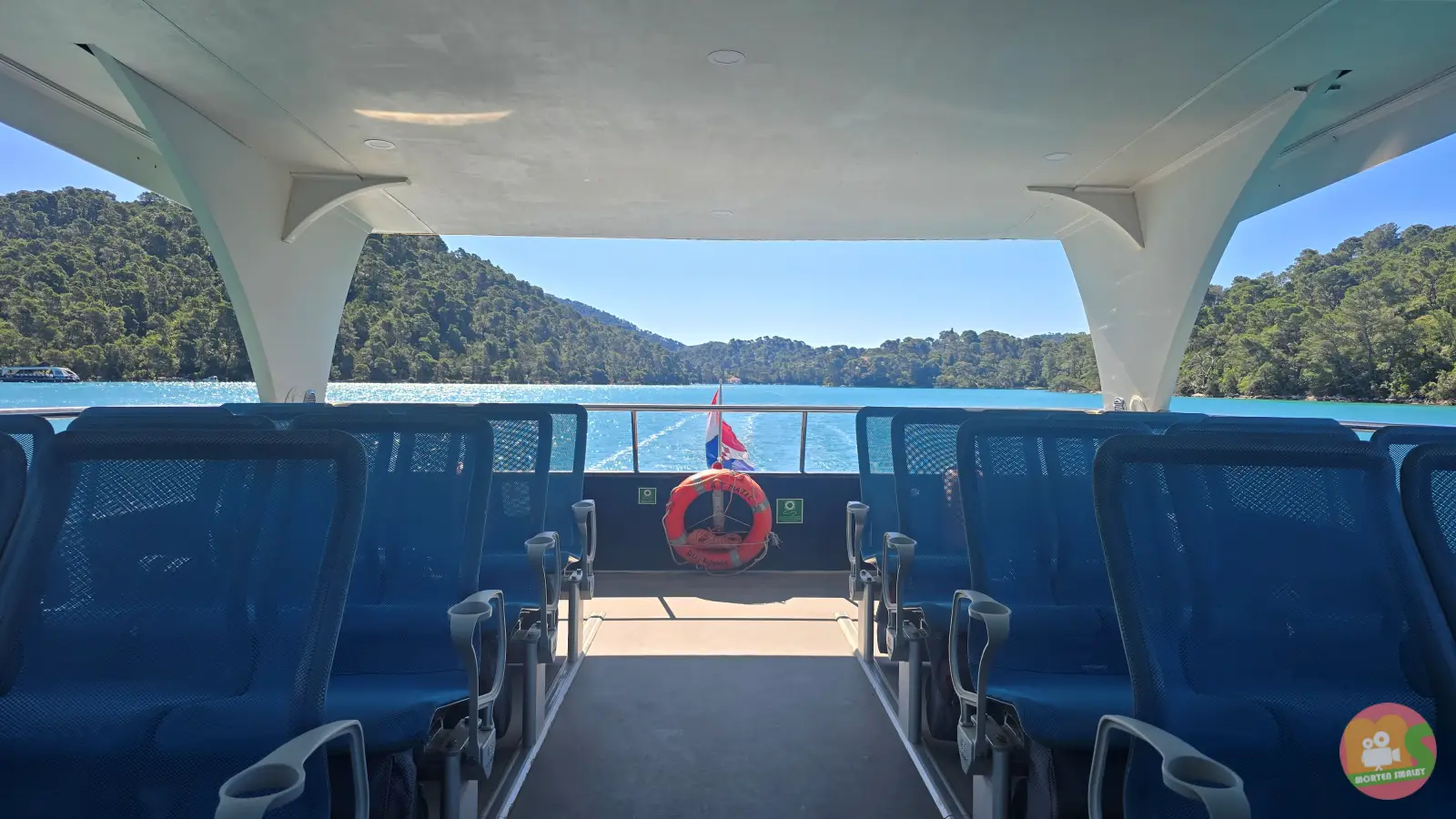
We also visited St. Mary’s Island inside the National Park. We took a boat from the ferry port near the main entrance. Boats depart every 30 minutes during the main season. You can also board at the small bridge (Mali Most). Our electric boat ride took just 7 minutes.
Once on the island, there’s a pleasant walking path that circles it in about 5–10 minutes. The main attraction is the historic monastery, which even served as a hotel for a period in the 20th century. The monastery garden was closed during our visit, but it is usually open during the main season. In addition to the monastery, you can see a few smaller chapels and some Roman ruins.
There’s also a restaurant on the island near the boat arrival point.
We spent around 20 minutes on the island before taking the return boat. The round-trip boat ticket is included in the National Park entrance fee. When boarding, the staff will tear off a strip of your ticket.
Small and Big Lakes
The other main attractions in the National Park are the Small Lake and the Big Lake.
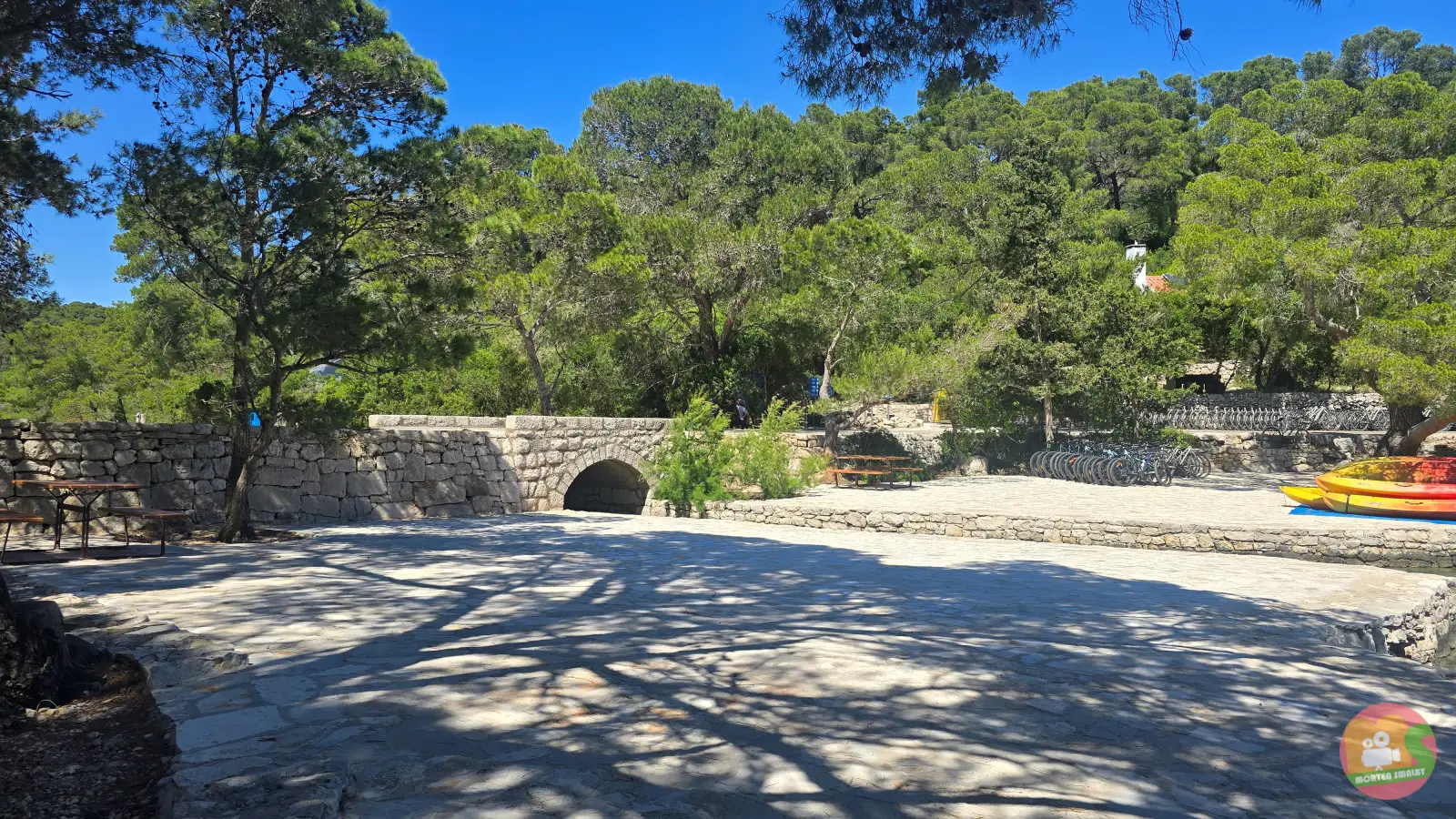
The Small Lake, together with the channel connecting the two lakes, is one of the most popular swimming areas. There are walking paths around parts of the Small Lake. At the small bridge (Mali Most), you can rent bicycles, kayaks, and SUPs (stand-up paddleboards).
The Big Lake is ideal for a kayak trip, a bicycle ride around the lake, or a boat trip to St. Mary’s Island. We rented electric bicycles in Pomena and cycled around the Big Lake — a pleasant 9 km loop. The path is paved with asphalt all the way and mostly flat, so it’s also very doable on a regular bicycle. The only minor inconvenience is that you have to carry your bike over the large bridge (Veliki Most).
We also visited the beautiful little settlement of Soline, located along the channel just after the Big Bridge. A short walk beyond Soline leads to a nice viewpoint where the channel opens into the sea.
Near the main ferry port, you’ll find a souvenir shop, a post office, and toilets. From the main parking area near Goveđari, it’s about a 500-metre walk to the ferry port.
Other Places We Visited on the Island
During our stay on Mljet, we explored the island with our own car, which we brought via the Prapratno to Sobra ferry connection. We visited the following places:
Sobra is the main ferry port connecting Mljet with the Pelješac Peninsula. Located in a bay roughly in the middle of the island facing the mainland, Sobra is a quiet settlement. Nearby, you can visit the Mljet wetlands called Blatina Sobra.
Babino Polje is the largest village on the island, stretching about 3 km through the central part of Mljet. Although it offers several apartments for rent, it felt noticeably quieter and less lively than Pomena or Polače.
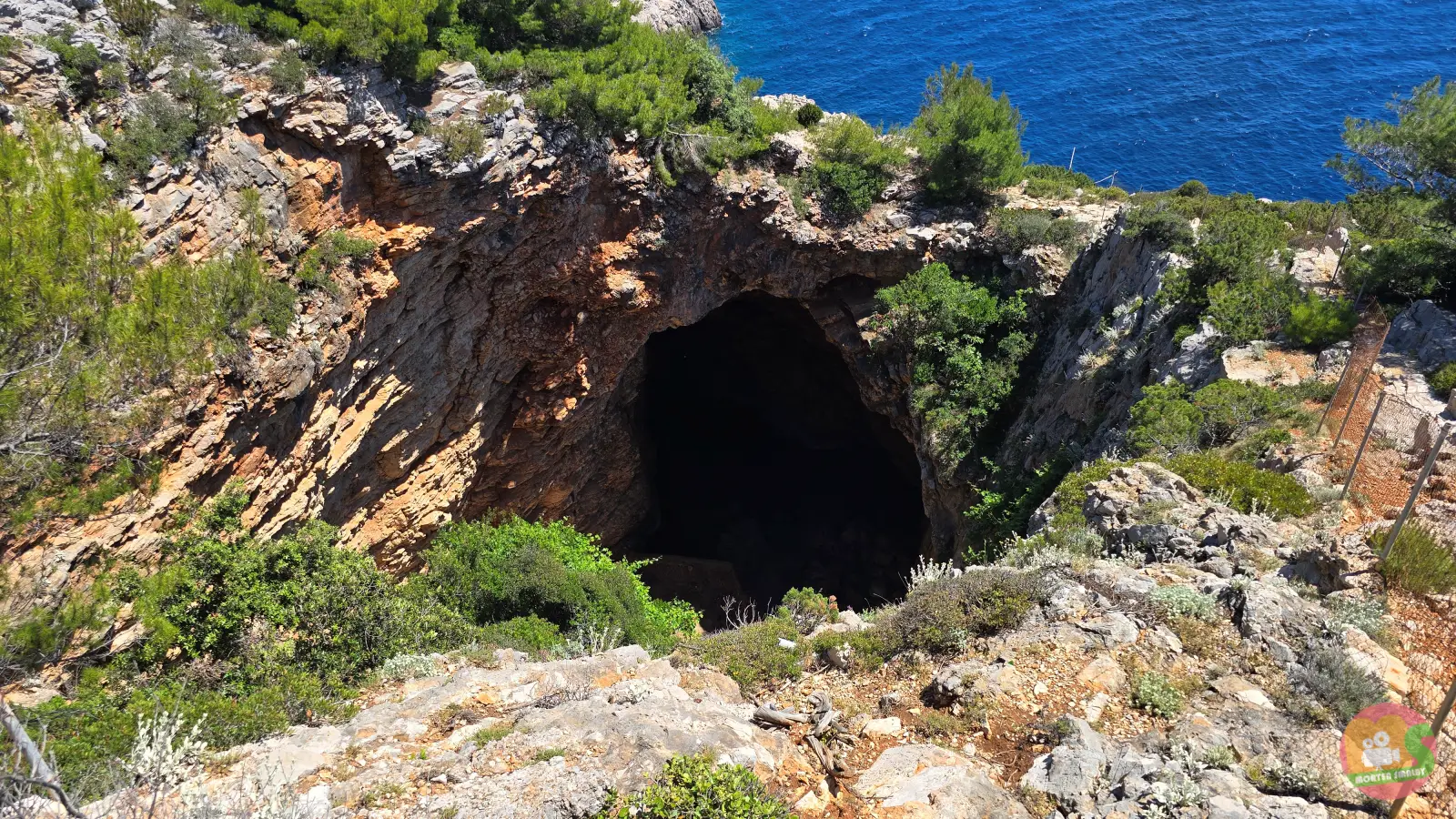
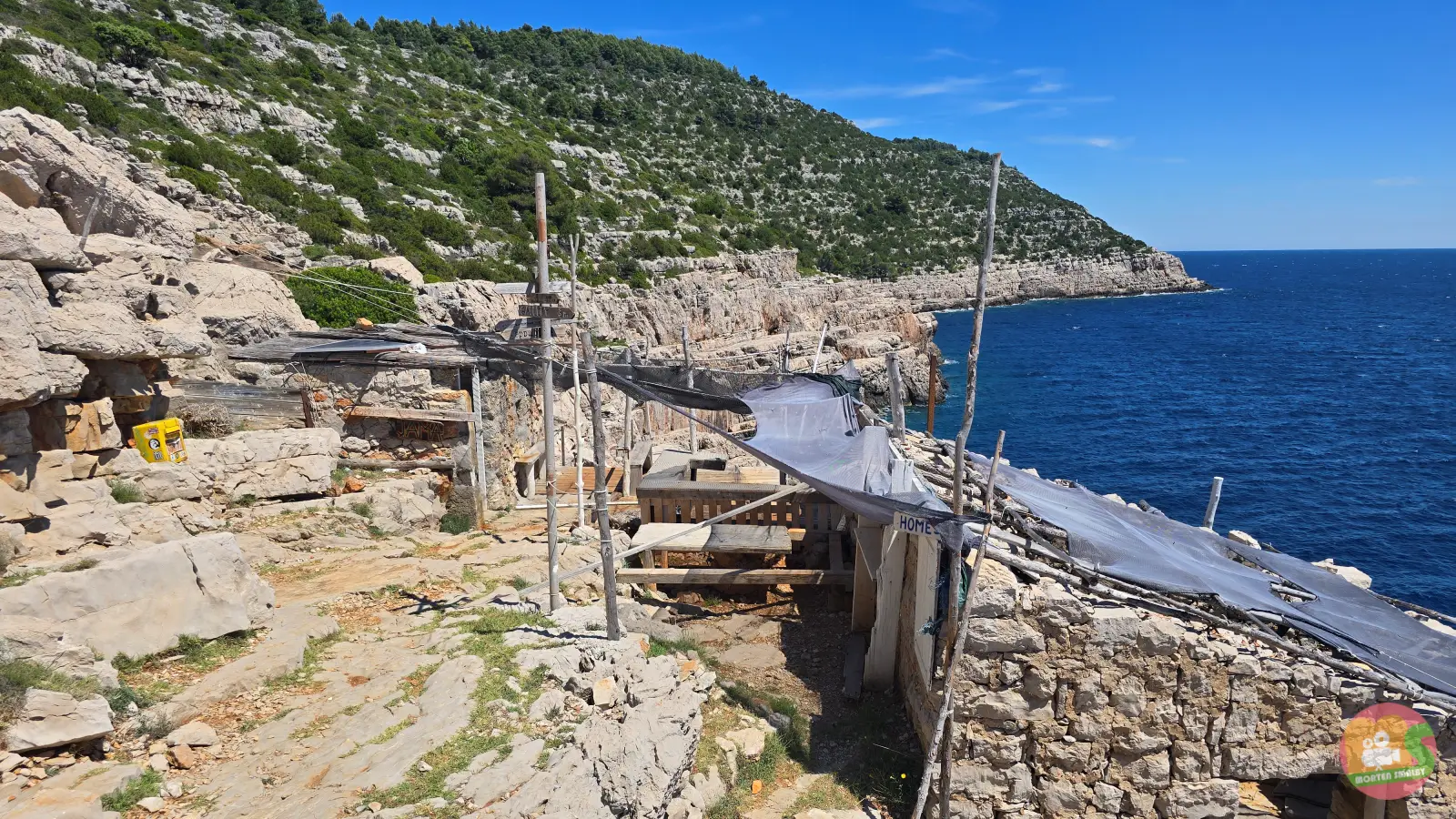
Odysseus Cave is located on the south coast near Babino Polje. The parking area (space for 3–4 cars) is roughly 800 metres from the cave. If driving, approach from the western end of Babino Polje. From the parking lot, a well-marked path leads downhill to the cave in about 10 minutes. At the cave, you can swim in the clear water, and there are cliffs suitable for sunbathing. The Kalypso coffee bar was closed when we visited and did not appear to be reopening.
Getting to Mljet
You can reach Mljet by several ferry connections, most of which are seasonal.
- Prapratno – Sobra: the main Jadrolinija car ferry connection to the island. This route operates year-round.
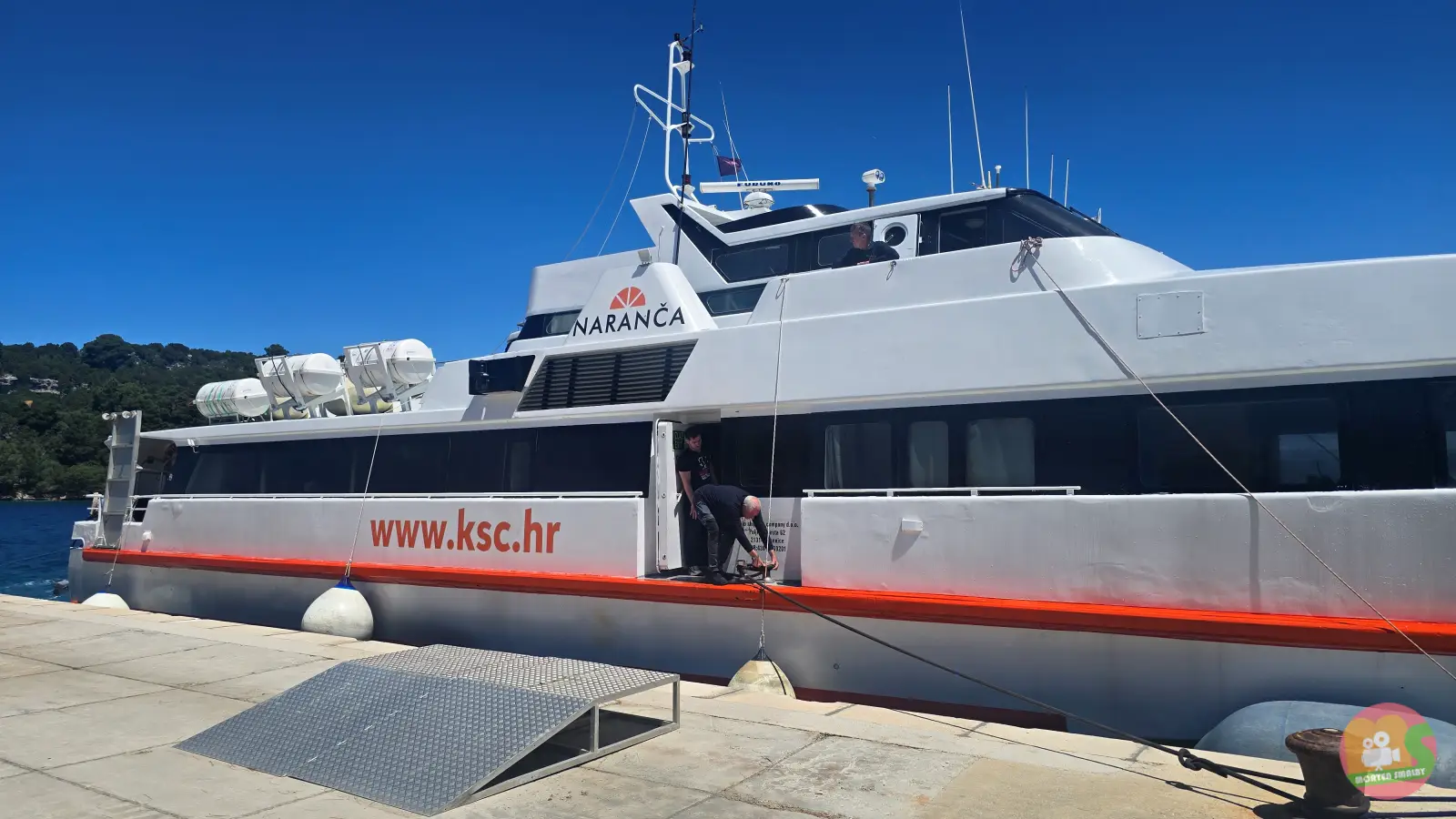
- Dubrovnik – Pomena: Krilo Shipping operates a fast ferry service between Dubrovnik and Korčula that stops in Pomena. This line runs from May to September.
- Split – Pomena: Kapetan Luka runs a seasonal catamaran route from Split to Dubrovnik, stopping in Pomena. The ferry also calls at Milna on Brač, Hvar Town, and Korčula en route.
- TP Line operates two fast ferry services to Mljet:
- Line 9807: Runs year-round between Dubrovnik and Sobra. From the end of May until the end of September, it continues to Korčula and also stops in Polače on the way.
- Line 9808: Operates year-round between Dubrovnik, Korčula, and Ubli on Lastovo. From the end of May until the end of September, it also stops in Sobra.
My final thoughts
I was very happy to finally visit Mljet, and the island did not disappoint — I will definitely return.
I loved staying in Pomena. It has a wonderful holiday vibe, and the locals we met were incredibly friendly. Polače also seemed nice, but since we didn’t stay there, it’s difficult to compare the two.
The National Park was stunning. I especially enjoyed our visit to St. Mary’s Island and the scenic bicycle ride around the Big Lake.
Overall, both a day trip and a 2–3 day stay on Mljet are excellent options. Anyone who appreciates peace and beautiful nature will not be disappointed.
Let me know whether you have visited Mljet or plan to do so!


2 thoughts on “Island Mljet”
Great video. We are staying in Pomena now for a couple of days. No car but renting bikes. We are staying above Restaurant Adriatic.
Thanks Pamela!
Pomena and Mljet are lovely; I really enjoyed visiting the Island.
Mljet is definitely the Island for renting bikes. If you visit the Restaurant Adriatic, say hello to him from the Danish Youtuber who was there in May.
Enjoy your stay
Best regards,
Morten