“If you saw where I settled, you would never ask me to come back” – Diocletian
Join us as we embark on a full tour of the Diocletian’s Palace, a retirement home upon which the city of Split was built. From Palace’ basements to St. Duje’s bell tower, this UNESCO site is a mesmerizing place any time of the year. In this video I will give you a tour of the Palace as I usually do for my friends and family when they come for a visit.
About Diocletian’s Palace
The Diocletian’s Palace was originally built as a Roman Empire fortress, commissioned by Emperor Diocletian around 300 A.D. He intended it to serve as his retirement residence.
Ten years after the palace was commissioned, Diocletian moved into the structure. The section of the palace facing the sea served as his apartment, while the remaining areas housed community areas, soldiers, noblemen, and ordinary people.
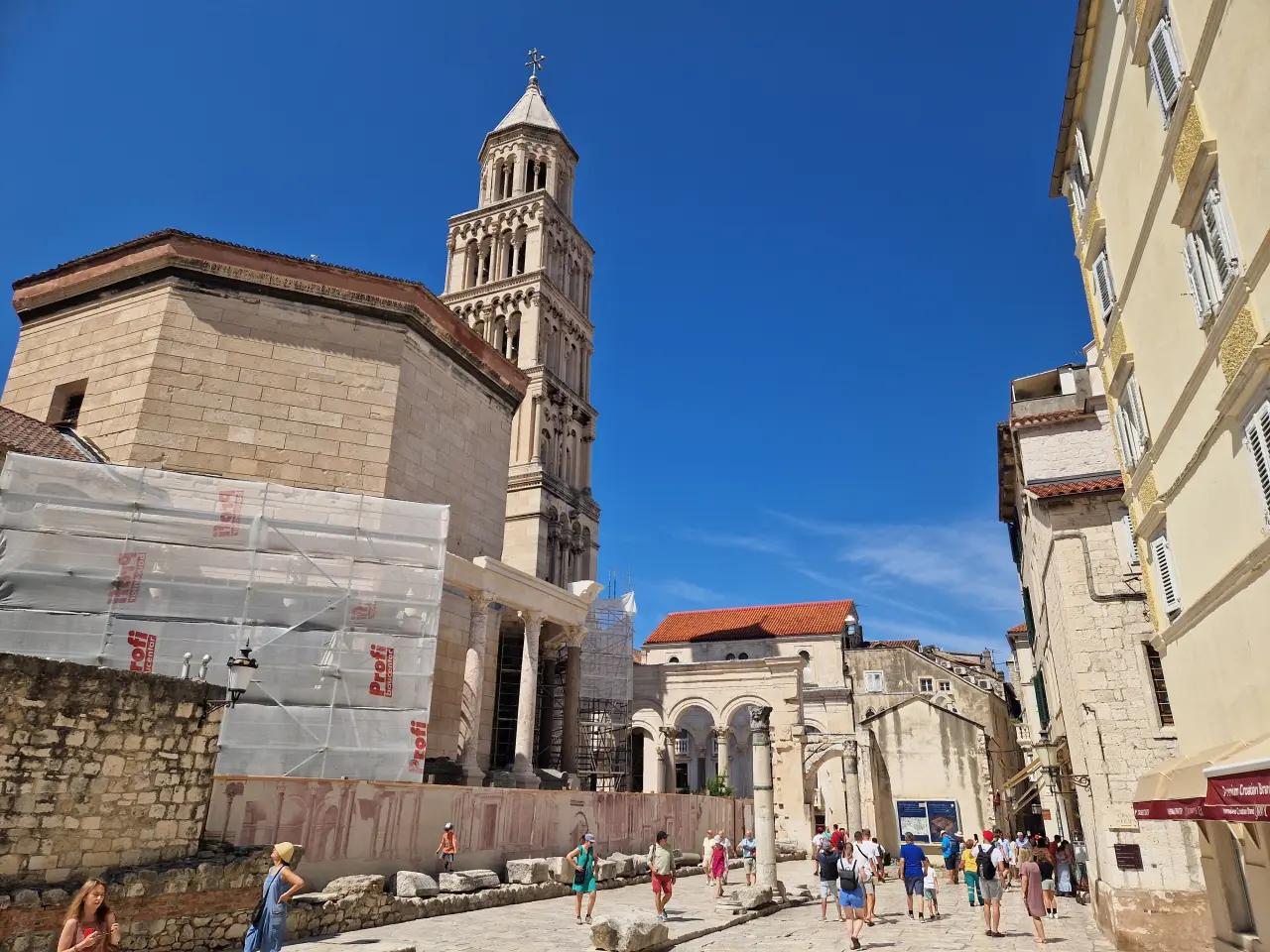
The palace measured approximately 210 by 190 meters, covering a total area of 40,000 square meters. It featured 16 defense towers, with the southeast tower being the best-preserved.
As shown in the video, the palace had four entrance gates: the Golden Gate to the north, the Silver Gate to the east, the Iron Gate to the west, and the Brass Gate to the south.
In 1979, Diocletian’s Palace was included in the UNESCO World Heritage List.
In recent years, the city of Split has implemented several measures to preserve the existing parts of the palace. Additionally, ongoing investments aim to improve and reconstruct parts of its structures.

Entrance fees Diocletian’s Palace
Visiting the Diocletian Palace is free, but several places within the Palace area charge an entrance fee. Here I have listed the places you can visit that have an entrance fee. The prices I mentioned are for an adult ticket. Most places have discounted tickets for children, students, and pensioners, as well as holders of a Split Tourist Card.
Sveti Duje Cathedral / Split Cathedral
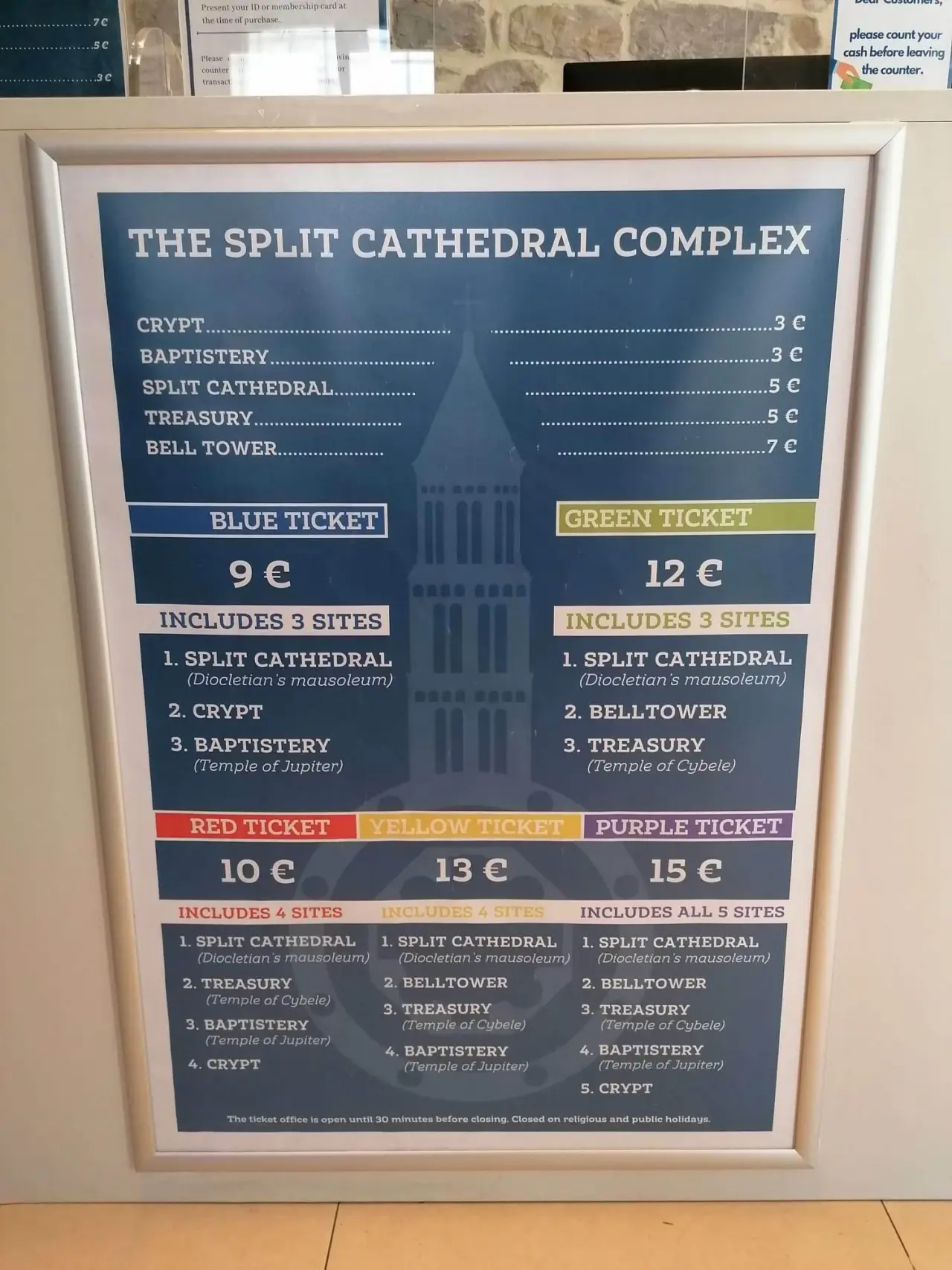
The Cathedral Complex has several parts that require an entrance fee, including the Crypt, the Baptistery, The Cathedral, The Treasury, and the tower. From the photo below you can see the prices.
The Diocletian Basement
As mentioned in my video, part of the basements below the palace can be visited for free, but for the grand tour, you must pay an entrance fee of 8 Euros.
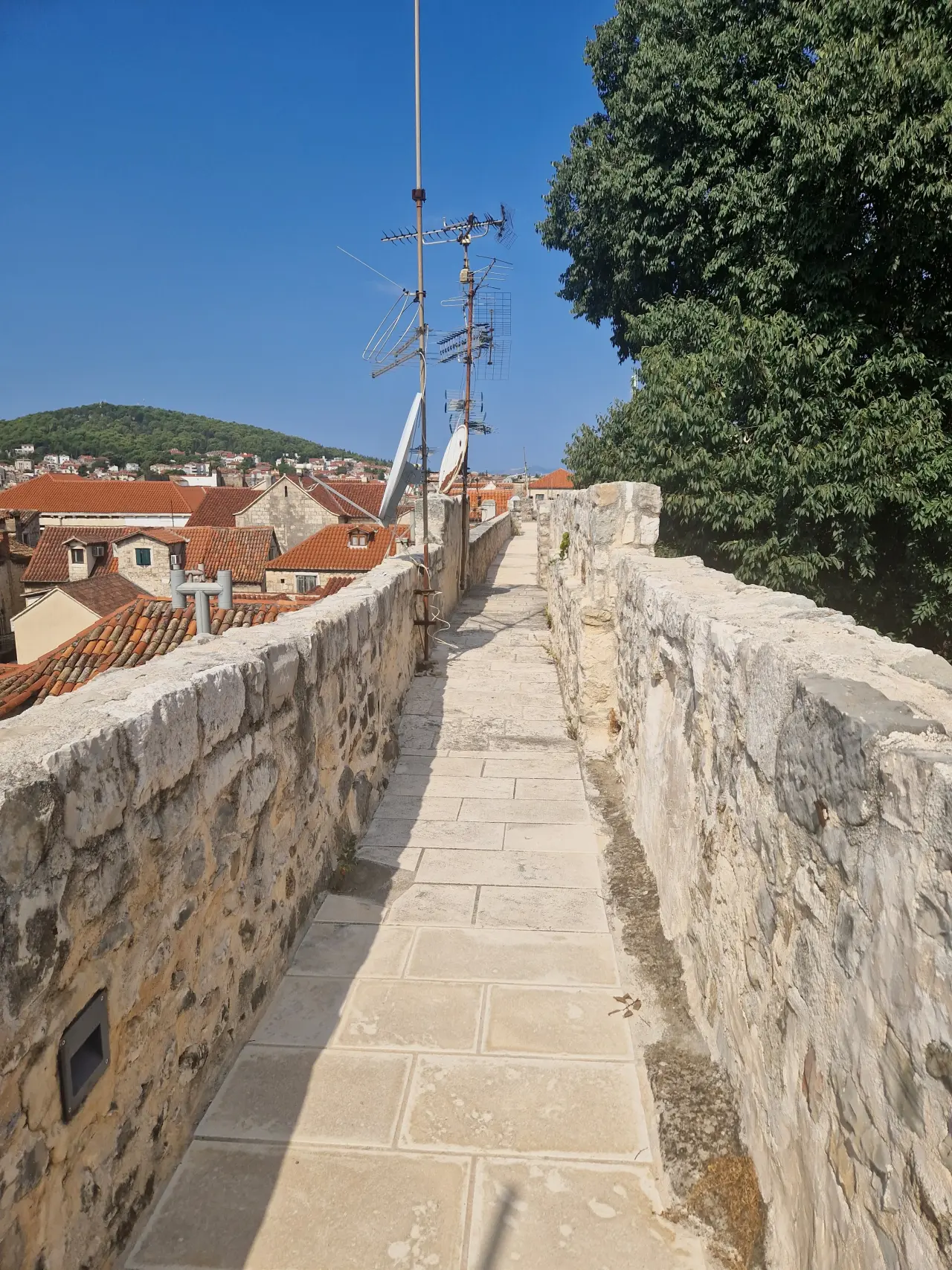
The Northern Wall
Tickets for the Northern Wall I visit in the video are sold at Galerija Emanuel Vidović, next to the Silver Gate. Please note a visit to the Wall requires a bit of planning. As a minimum you need to buy the tickets in the morning for an afternoon tour or even better buy them the day before.
You can check the opening hours of the Galerija here. Also, please note that from the Galerija, it is a 5-minute walk to the wall, and an employee from the Museum of Split will guide you on the wall tour.
The ticket price for a walk on the wall is 6 Euros.
Museums within the Palace
Split City Museum (Muzej grada Splita), the main museum in Split is located in The Papalić Palace. Currently, the museum is undergoing renovation, and as far as I heard, they found new parts of Diocletian’s Palace in the basement. So this will prolong the renovation works. When open again the entrance fee is probably 6 or 8 Euros.
Ethnographic Museum (Etnografski muzej), the museum exhibiting local folk costumes and folk handicrafts collected over more than 100 Years. The ticket price is only 3 Euros.
Emanuel Vidovic Gallery (Galerija Emanuel Vidović), the museum is dedicated to the life and works of the painter Emanuel Vidović. An entrance ticket cost 6 Euros.
Interesting facts about Diocletian Palace
Approximately 3,000 people live within the territory of Diocletian’s Palace today.
Diocletian’s octagonal mausoleum, later reconstructed into the Cathedral of Split, is one of the oldest in the world.
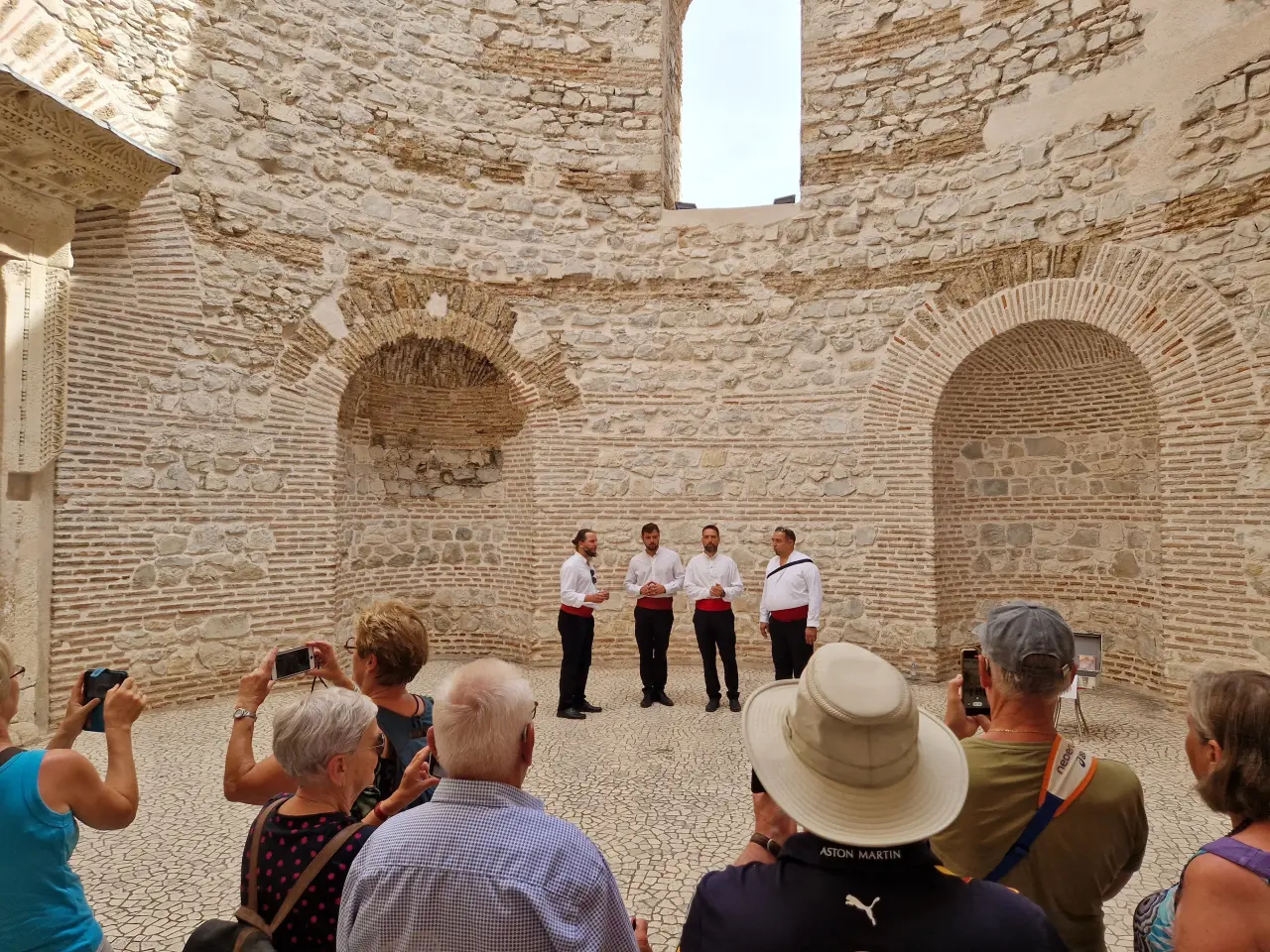
The Vestibule (or Atrium) served as the entrance to Diocletian’s apartment. During the summer season, Klapa concerts are held there each evening. Klapa is a traditional form of a cappella singing performed by groups of friends. Thanks to the unique shape of the Vestibule, the acoustics are extraordinary.
The Cathedral of Split, known as Saint Domnius Cathedral (locally called Sveti Duje), features a bell tower named after Saint Domnius, a 3rd-century bishop from the nearby Roman city of Salona. Saint Domnius was martyred, along with seven other Christians, during Emperor Diocletian’s persecutions. He was beheaded in 304 A.D. in Salona.
The outer walls of the palace were up to 210 cm thick!
The basement of the Palace was Targaryen’s dragon keep in the popular series Game of Thrones.
FAQ
What is Diocletian’s Palace and why is it important?
Diocletian’s Palace is a palace built by Emperor Diocletian as his retirement residence. Today it is one of the best-preserved Roman monuments in the world and the historic center of Split.
Are there opening hours for Diocletian’s Palace?
The palace grounds are open 24/7, as it’s part of the living city. Individual sites inside (like the cellars or the cathedral) have their own opening hours.
Do you need a ticket to visit Diocletian’s Palace?
Entrance to the palace grounds is free, but some attractions inside—such as the Cathedral, Bell Tower, or the Cellars—require a paid ticket.
Is there a map of Diocletian’s Palace available for visitors?
Yes. Free maps are available at the Tourist Information Centers, and you can also download digital maps online.
What are the must-see attractions inside Diocletian’s Palace?
The top highlights include the Cathedral of St. Domnius, Peristyle Square, Diocletian’s Cellars, the Temple of Jupiter, the Golden Gate, and the Bell Tower (with the best city views).
How long does it take to visit Diocletian’s Palace?
A full visit takes 1–3 hours, depending on how many attractions you enter and visit.
Where were Game of Thrones scenes filmed inside Diocletian’s Palace?
The palace cellars were used to film Daenerys’ throne room and dragon scenes in Meereen. Fans can visit the exact filming locations.